Born to run and be there for his family, Jason Colee underwent a high-stakes spinal surgery so he could do both
Jason Colee, a husband and father of two from Alabama, runs because it refreshes him physically and mentally. In the last three years alone, he has run (and won) multiple 5Ks, several 10Ks, three half-marathons, a 16.2-mile challenge in the Great Smoky Mountains, and even a full marathon.
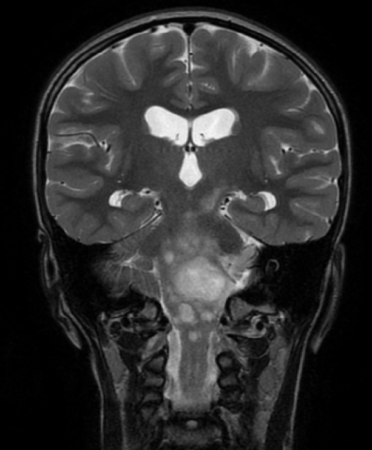
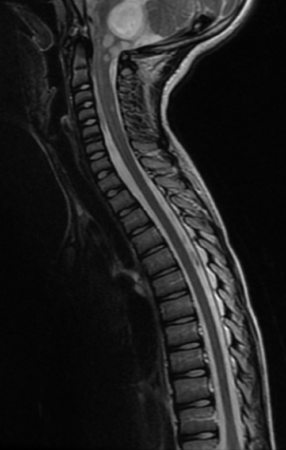
Notably, just before all these achievements, he underwent a six-hour spine surgery at Vanderbilt University Hospital to remove a rare tumorous mass that was nestled inside his spinal cord.
Colee first noticed problems with his gait, was seen by his orthopedist and tried physical therapy. But after being diagnosed with a myxopapillary ependymoma, Colee’s doctors in Huntsville told him he needed to be seen by the best spine specialists there were.
“Fortunately, we live in North Alabama, and we know Vanderbilt’s got a stellar reputation,” said Colee.
He asked his doctor how soon he should be seen at Vanderbilt Health. “You need to be in there immediately,” was the doctor’s reply.
High risk, high reward
The following week, Colee and his wife, Jennifer, traveled to Vanderbilt-Ingram Cancer Center Belle Meade. He was quickly matched with Scott Zuckerman, MD, MPH, who Colee’s referring physician said would be the best neurosurgeon to handle his case.
“We took it day by day,” said Zuckerman. “We told him it’s a big, high-risk surgery. I couldn’t make any promises about what type of tumor it was or how tightly it was stuck to his spinal cord, but I think he had come to terms with that.”
Colee was admittedly very nervous. But in undergoing the surgery, he gave himself the best shot to preserve his ability to walk, which mattered for two reasons: his love of running and his family.
“There’s a chance that, at some point, you’re going to walk your daughter down the aisle and be there for your grandkids someday, hopefully,” Colee recalled his wife saying. “We’ve got to do this.”
Colee said the “we” mentality Jennifer emphasized helped restore his confidence that the surgery was the right course of action. He credited Jennifer’s resilience and the shared Christian faith of the family — which includes daughter, Emma, and son, Jake — for his ability to withstand the emotional impact of the ordeal.
“The risks were high, but the rewards were high also,” Colee said.

Nervous about his nervous system, Colee found his care team rose to the occasion
It makes sense that someone headed to anesthesia for spine surgery would be uneasy. Colee’s worry remained despite what he called excellent preoperative care. That’s when Zuckerman came to speak to him.
“This is the A-team,” Zuckerman told Colee. “Everybody you see in this room is the best at what they do.”
On one hand, getting the best of the best may signal that this is as serious as it gets. But on the other, it’s the ultimate assurance that a patient has found the right surgical team.
“The operating room is a serious, focused environment,” Zuckerman said. “But we go into any complex surgery with a really good plan, just like a coach would go into a basketball game with a focused game plan.”
Colee said he never fully conquered his nerves before the surgery.
“Vanderbilt is first-rate,” Colee said. “The process of getting there and everything they did to get me back and ready to go was top-notch; unlike anything we’d ever experienced. It was fantastic.”
Finally, thanks to the anesthesia, his worries subsided as he slipped into sleep. When he awoke, with the tumor out of his spine, he was hit with a wave of relief. Motor function testing showed that everything came back clear.
“I shouldn’t be this excited about being able to wiggle my dang toes,” Colee said. “I guess the gravity of it all hit me after the fact.”
Life after a spinal tumor was just as fulfilling as before
Colee was grateful that his rehabilitation care team wanted input on how he wanted to attack recovery.
“‘We’ve got guidelines we want you to follow and milestones we want you to hit, and it’s up to you how fast you hit those,’” Colee recalled being told. “The nurses let me do what I wanted to do when I wanted to do it as long as it was safe.”
In the end, Colee left the hospital only 48 hours after the conclusion of surgery, a remarkable outcome for a spinal operation.
Soon, Colee wondered when he could get back to running. Zuckerman said if he followed his recovery plan to the letter, it wouldn’t be long.
All told, it ended up only being a six-week hiatus before he put his running shoes on again. It was ugly, Colee said, “like a frog in a frying pan,” but he was moving.
Then came the 5Ks, 10Ks, half-marathons, 16.2-mile race and a full marathon this past spring.
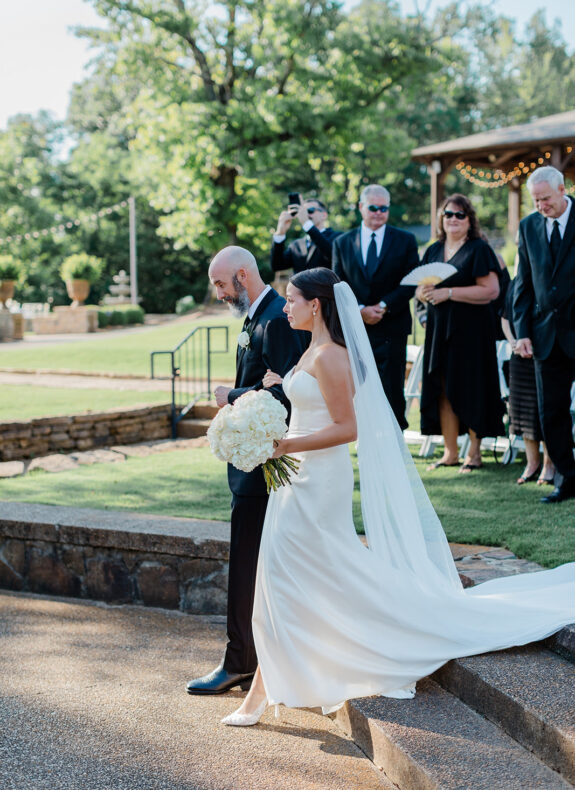
But the most important thing Colee did with his legs didn’t come on the racecourse. It was, as his wife had foreseen, walking his daughter down the aisle.
“Everybody at Vanderbilt was invested in us getting back to where we wanted to be,” Colee said. “This was not guaranteed, even with the surgery. But I knew that Dr. Zuckerman and everybody involved in the process wanted to help me do what I wanted to, whether it was walking my daughter down the aisle or checking a marathon off the bucket list.”
The post Born to run and be there for his family, Jason Colee underwent a high-stakes spinal surgery so he could do both appeared first on Vanderbilt Health News.