Vanderbilt-Ingram Cancer Center will host two specialized retreats for lung care in October for colleagues across the organization to collaborate, review progress and identify opportunities to improve patient outcomes.
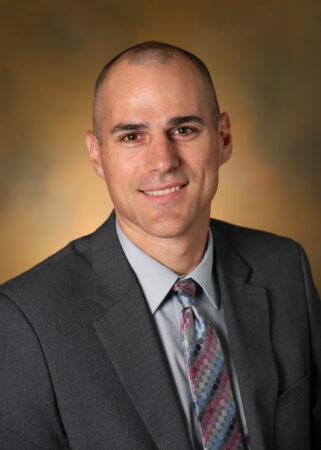
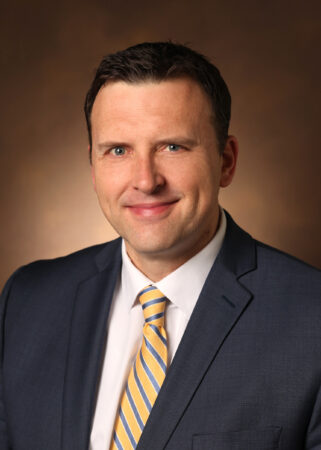
The event co-chairs are also co-leaders for the Thoracic Oncology program at Vanderbilt-Ingram: Fabien Maldonado, MD, MSc, Director of Interventional Pulmonology at the Vanderbilt Lung Institute, and Evan Osmundson, MD, PhD, Vice Chair of the Department of Radiation Oncology.
They worked in partnership with Melinda Aldrich, PhD, MPH, Professor of Medicine in the Division of Genetic Medicine and Clinical Pharmacology, for the research-based retreat. Aldrich is an accomplished lung cancer investigator and holder of the Robert A. Goodwin, Jr., MD, Directorship
“These retreats allow us to reflect on our progress, strengthen collaborations across disciplines and identify opportunities to further improve care for patients with lung cancer. We remain focused on building the most patient-centered, data-driven lung cancer program in Tennessee,” said Maldonado, holder of the Pierre Massion Directorship in Lung Cancer Research.
“At our last retreat, we launched a real-time lung cancer time-to-treatment tracker in Tableau to monitor patients through the referral, workup, and treatment pipeline,” Osmundson said. “Gathering again allows us to build on that momentum and continue elevating patient care.”
Research Retreat (Friday, Oct. 2, 9 a.m.-1 p.m.): Open to all researchers across all disciplines at 3401 West End Ave., Second Floor, Suite 290.
Clinical Retreat (Friday, Oct. 30, 7:30 a.m.-1 p.m.): Open to clinical practitioners and team members involved in lung cancer care and research, Scarritt Bennett Center, 1027 18th Ave. S.
These collaborative sessions offer a valuable opportunity for teams to align around the long-term strategic vision for the lung cancer program as well as assess program performance against national and regional benchmarks.
There will also be time to discuss and identify initiatives to drive progress over the next few years.
Vanderbilt-Ingram Cancer Center has named Fabien Maldonado, MD, MSc, and Evan Osmundson, MD, PhD, as co-leaders of its Thoracic Oncology Program, reflecting the center’s commitment to expanding disease-specific cancer care for patients across the region.
Evan Osmundson, MD, PhD
As co-leaders, Maldonado and Osmundson will identify gaps and opportunities to improve prevention, detection and treatment of lung cancer. They will build collaborative bridges across thoracic specialties — including thoracic surgery, pulmonology, radiology, pathology, and medical and radiation oncology — recognizing that lung cancer treatment frequently requires a coordinated, multimodal approach.
They will also work to expand access to innovative technologies, including robotic bronchoscopy, which enables biopsy of previously unreachable areas of the lung; advanced local therapies such as minimally invasive surgery and adaptive radiotherapy; and targeted systemic treatments tailored to each patient’s tumor. This work will reduce wait times, improve diagnostic accuracy, lower toxicity and deliver personalized therapy within a multidisciplinary, team-based model of care.
“Lung cancer is a top priority for our cancer center because Tennessee has among the highest rates of lung cancer mortality in the country,” said Ben Ho Park, MD, PhD, the Benjamin F. Byrd Jr. Professor of Oncology and Director of Vanderbilt-Ingram. “The number of Tennesseans who smoke is higher than the national average, and our screening rates are lower — a combination that disproportionately affects our communities. The best way to cure lung cancer is to catch it early. Under the leadership of Drs. Maldonado and Osmundson, we are rebooting our Thoracic Oncology Program to bring together lung cancer researchers, care providers and trainees across Vanderbilt-Ingram in an even more collaborative way. That collaboration will drive higher-impact research and discoveries that translate quickly into meaningful benefit for our patients and the people of Tennessee.”
Maldonado, Professor of Medicine, Thoracic Surgery and Mechanical Engineering, focuses his research on clinical trials in interventional pulmonology, CT-based quantitative imaging for lung cancer and robotic bronchoscopy.
“Major advances in lung cancer care, including lung cancer screening and minimally invasive diagnostic and therapeutic interventions, have improved lung cancer survival rates by more than 25% over the past five years; however, much work remains, and we are excited to continue building the most patient-centered, data-driven, and technologically advanced lung cancer program in the state of Tennessee,” said Maldonado, who holds the Pierre Massion Directorship in Lung Cancer Research.
Osmundson, Associate Professor and Vice Chair of Clinical Operations in the Department of Radiation Oncology, where he serves as medical director, is board-certified in radiation oncology. He specializes in thoracic malignancies and lymphoma and leads several investigator-initiated clinical trials designed to enhance the synergy between radiation therapy and immunotherapy, with funding from the National Institutes of Health and other entities. He has also become a leading voice for patients facing barriers to care, with research advocating for prior authorization reform to reduce treatment delays in oncology.
“Thoracic oncology has entered a remarkable era of personalized medicine, in which therapies tailored to each patient’s individual cancer are producing outcomes we couldn’t have imagined even a decade ago. Patients are living longer and, importantly, living better than ever before, yet we know there’s still much further to go,” said Osmundson. “At Vanderbilt, our innovative research and clinical programs have helped drive this revolution, and our team-based care brings these discoveries to patients today. I’m more excited than ever to extend this care across our region and to discover what comes next.”
Together, the co-leaders bring complementary expertise aimed at delivering the most innovative and advanced options for patients at all stages of lung and other thoracic cancers. The goal of the Thoracic Oncology Program is to improve survival and quality of life — personalizing treatment for every patient, regardless of when they arrive at Vanderbilt-Ingram.
Eating, speaking clearly and breathing easily are essential functions we often take for granted, and Nick Schrock of Macon County, Tennessee, admits he did, too. Then, he noticed a small bump inside his mouth that changed everything.
He was just 30 when he felt a solid bump on the roof of his mouth where the hard and soft palates meet. It didn’t hurt and wasn’t irritated, so Schrock dismissed it as a random nodule of bone he just hadn’t noticed before. Nine months later, however, it began to grow and was soon the size of a quarter and felt “rubbery” rather than hard.
“It started to hurt when I yawned or took a bite of food,” he said. “It got bothersome, and I told my wife I needed to have it looked at.”
Today, after recovering from surgery at Vanderbilt University Hospital to remove what turned out to be a cancerous tumor and radiation therapy to target any remaining cancer cells, Schrock is grateful for all the care he’s received, but especially to have his voice back. Because of this, he feels he can be a better parent to his young daughter, Magnolia Mae, and can enjoy life with his wife, Brittany, and other family and friends.
After the tumor removal left a sizable hole inside his mouth, he initially could only speak in a muffled, lispy whisper. This was due to velopharyngeal insufficiency, a condition where the seal between the oral and nasal cavities does not close completely.
Schrock credits Vanderbilt University Medical Center providers for not only quickly addressing his cancer but also for restoring his voice. A key player on that collaborative team is Tyler Ames, DMD, chief of the Division of Dentistry at VUMC.
A custom obturator designed by VUMC’s Tyler Ames, DMD, sealed the hole left after removal of an oral cancer and restored Nick Schrock’s voice. It fits along the roof of the mouth, and the ball seals the cavity. (photo by Susan Urmy)
A rare cancer and arduous treatment
In January 2024, a biopsy revealed adenoid cystic carcinoma (ACC), a rare cancer typically originating in the salivary glands that makes up about 1% of all head and neck cancers. This type of cancer doesn’t run in families, and there are no known risk factors. While ACC is slow growing, it is aggressive. Surgery is the primary treatment, often followed by radiation. Reconstruction or prosthetics are often needed following treatment.
Because of the intricate anatomy of these areas of the body and often delayed detection, treatment for head and neck cancers can be arduous and impact critical functions like speaking, breathing and swallowing.
Within a week, the Schrocks were consulting with Alexander Langerman, MD, SM, a head and neck cancer and reconstructive surgeon at VUMC with fellowship training in microvascular reconstruction. Surgery was quickly scheduled.
Langerman worked for five hours to remove a golf-ball sized growth that was extensively invading the soft tissue and muscle, especially muscles involved with chewing. It required removal of part of Schrock’s upper jawbone and a few teeth. Langerman then performed a local flap surgery using part of Schrock’s inner cheek to help patch the hole inside his mouth.
Schrock then underwent radiation therapy under the care of D. Nathan Kim, MD, PhD, a Vanderbilt Health radiation oncologist at Vanderbilt-Ingram Cancer Center at Wilson County, which was much closer to his home.
Making it through 33 sessions of radiation treatment was one of the hardest things he’s ever done in his life, Schrock said. His mouth and throat were raw and dry. His stomach was continually upset. His hair, including his beard, fell out. And he lost 60 pounds.
And there were other setbacks. He lost hearing in his right ear because of a fluid buildup due to the radiation. That was resolved quickly through a minor procedure by otolaryngology-head and neck surgeon Matthew O’Malley, MD. Schrock also began having difficulty breathing through his nose. Another otolaryngology-head and neck surgeon, Naweed Chowdhury, MD, MPH, cleared swollen tissue caused by the radiation from a maxillary sinus, which improved his ability to breathe.
But the biggest thing he wanted resolved was his voice. Ames was ready. He had been in consultation with Langerman from the start of Schrock’s journey, viewing imaging and following his progress closely.
“Nick expressed that he was afraid of his daughter being embarrassed by his speech,” Ames said. “I took this to heart as I also have a young daughter. Putting myself in his shoes, I knew that I had to do everything I could to help him.
“With these cases you really are not sure what is possible until you try. Nick is an amazing patient who is very motivated. His drive helped to keep the treatment on track and helped motivate me to do the best I could for him.”
Prosthetics to seal oral cavity holes
When individuals are left with holes or deficits in their oral cavity due to congenital defects like cleft palate, cancer surgeries or trauma, prosthetics known as obturators are often custom designed to restore function. This is what Schrock needed.
“An obturator is a prosthetic device used to close and seal a defect or opening in the hard or soft palate to assist in speech and eating and drinking,” Ames said. “This can prove challenging because you are not always sure if the patient is going to tolerate having the obturator in the back of their throat.”
Because of the precision diagnoses and effective treatments provided by Vanderbilt-Ingram clinicians, patients come not just from Tennessee but also from parts of seven contiguous states and beyond. That means the center sees a higher volume and higher complexity of patients with head and neck cancers. Ames was increasingly being referred individuals who needed restoration after surgery.
Obturators are usually created by specialized dentists known as prosthodontists or maxillofacial prosthodontists, but many private practices instead focus on dental implants and other higher volume, profitable procedures. Finding a dentist who can create a custom obturator isn’t easy. With the growing number of cancer patients he was seeing with unique needs, Ames decided a few years ago he would research and teach himself the precision craft of creating obturators.
“Since Tyler joined VUMC, we have worked together in tougher and tougher cases and grown together as partners,” Langerman said. “Nick’s case was indeed a tough one, and his success is the product of the years of work Tyler has put in to restore patients to a greater quality of life after surgeries such as this.”
Ames works with Vanderbilt Health surgical oncologists to review imaging, even running over to the surgical clinics so he can see the space he needs to seal. He works with an area dental lab to produce obturator prototypes and in the early days, he even tried varied materials to achieve the best seals and most comfortable devices. Now, though every case is different, he has become adept at problem-solving and creating obturators for even highly complex cases.
“In Nick’s case, a nasal endoscopy performed by Dr. Langerman with the custom obturator in allowed me to have a ‘GPS’ to show exactly where I needed to add to the obturator to better seal the defect and aid his speech,” Ames said. “We could see the obturator in place from the viewpoint of the sinus, which helped tremendously.”
Recently, Ames met with Schrock again and checked in on his progress. His voice was strong and easily understandable. But Ames cocked his head, listened closely, and told Schrock he felt like he could make some minor adjustments to improve his voice even more. Schrock smiled.
“Dr. Ames has significantly changed my life,” Schrock said. “I still struggle, and I don’t like talking in front of a lot of people, but what he’s done for me is incredible.
“I don’t mind sharing my story if it gives someone else hope. It does get better. I didn’t feel that way for a while, but it does.”