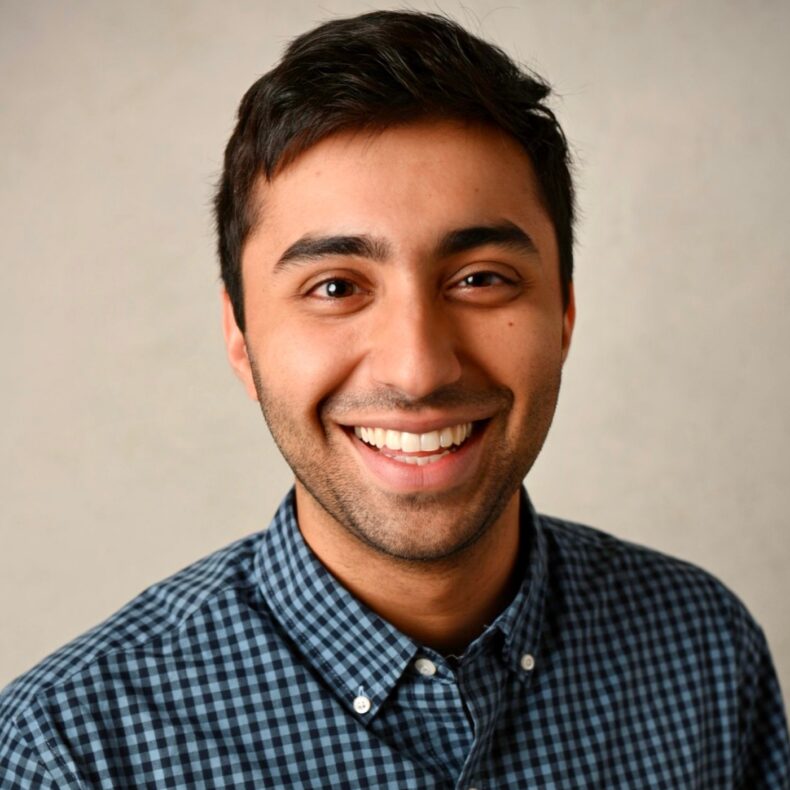
Bhagirathbhai Dholaria, MBBS, Associate Professor of Medicine and a hematopoietic cell transplantation specialist, along with peers from several other transplant centers across the country, recently reached a major milestone in stem cell transplantation.
Bhagirathbhai Dholaria, MBBS
Their clinical trial, called ACCESS, showed that using “mismatched donors” for blood or bone marrow transplants is safe, potentially opening the door to cures for blood cancers such as leukemia and lymphoma.
Findings from the ACCESS trial were recently published in the journal JAMA Network Open.
“Many patients need a donor whose tissue type closely matches their own,” Dholaria said. “Historically, patients from racial and ethnic minority groups have had a harder time finding a perfectly matched donor because donor registries included fewer people from their backgrounds.
“As a result, minority patients are referred less often or move more slowly toward transplant because finding a fully matched donor can be difficult. If doctors believe a suitable donor is unlikely, they may never see a transplant physician in the first place.”
Expanding access and opportunity at the same time
The ACCESS trial set out to dismantle this barrier by allowing mismatched, unrelated donors for patients lacking a full match. Typically, traditional clinical trials restrict enrollment to matched donors only.
By eliminating the requirement for a perfectly matched donor, ACCESS opened the door for more Asian, Black, Hispanic and multiracial patients who previously may not have been eligible for a transplant or clinical trial.
Nearly half of participants in this trial identified as members of racially or ethnically underrepresented groups.
Comparing nearly 670 patients across three different studies, Dholaria and colleagues found that ACCESS participants were more than 25 percentage points more likely to come from diverse racial and ethnic backgrounds than those enrolled in other trials. The broader eligibility criteria also expanded the pool of potential donors available to patients.
“The more we broaden access to transplant, the more patients we can give an opportunity for cure,” said Dholaria.
Nearly two decades ago, after being diagnosed with leukemia at age 7, Lily Hensiek promised to help other children diagnosed with cancer.
At the time, doctors at Monroe Carell Jr. Children’s Hospital at Vanderbilt explained her diagnosis through a simple analogy. Cancer was like weeds taking over a garden, they told her, and chemotherapy was the tool used to remove them. The idea inspired her family to create the Lily’s Garden Fund, a fundraising effort dedicated to advancing childhood cancer research, training and innovation.
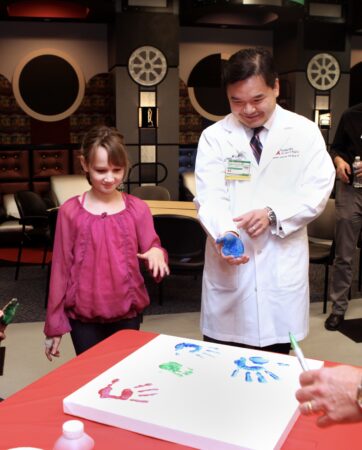
Lily Hensiek serves as patient ambassador for Hyundai Hope on Wheels event at Monroe Carell in 2011. (photo by Susan Urmy)
Over the past 18 years, Lily’s Garden has funded pediatric cancer research, programs, lectureships, fellowship training and early-career investigators.
The family recently announced its latest commitment: $5 million to establish the Lily’s Garden Pediatric Leukemia Program at Monroe Carell to support leukemia research, physician-scientist leadership, precision oncology, innovative discovery projects and family-centered care initiatives. This gift brings the family’s total giving to $8 million. Family members have added to Lily’s Garden through personal giving, fundraising events, and the support of friends and community partners.
“We are so incredibly grateful to Lily’s family; they are absolutely amazing,” said Debra Friedman, MD, MS, Director of the Division of Pediatric Hematology and Oncology at Monroe Carell and Deputy Director of Vanderbilt-Ingram Cancer Center.
“This leukemia program will provide us the ability to continue to advance discovery for leukemia and then translate that discovery to patients in the clinic,” continued Friedman, holder of the E. Bronson Ingram Chair in Pediatric Oncology.
A Family Affair
The Lily’s Garden Fund has been a family affair. Joining Lily in the endeavor are her parents, Larisa and Phillip Featherstone; grandparents, Carol and Ron Johnston; and sisters, Sophie Hensiek and Sophia Featherstone.
Lily and Sophie Hensiek make soaps for their first fundraiser for pediatric cancer efforts. (submitted photo)
The family, from Franklin, Tennessee, owns a workplace safety consulting and third-party claims administration firm, Johnston & Associates, which was founded by Ron.
Lily was first diagnosed with pre-B cell acute lymphoblastic leukemia when she was in second grade. At the time, she set what felt like a lofty goal — raising $1 million for childhood cancer research.
“I never imagined when we started the Lily’s Garden Fund that it would go this far or become this big,” said Hensiek, who is now 25. “I’m very thankful that we’ve had the opportunity to do all of this and help support research.”
The family’s philanthropy journey began simply.
“Our first fundraiser was making soap,” said Larisa Featherstone, who also serves as Chair of the Monroe Carell Advisory Board. “Honestly, it felt insurmountable,” Featherstone said. “But it shows how something really small can compound over time, and every bit truly makes a difference.”
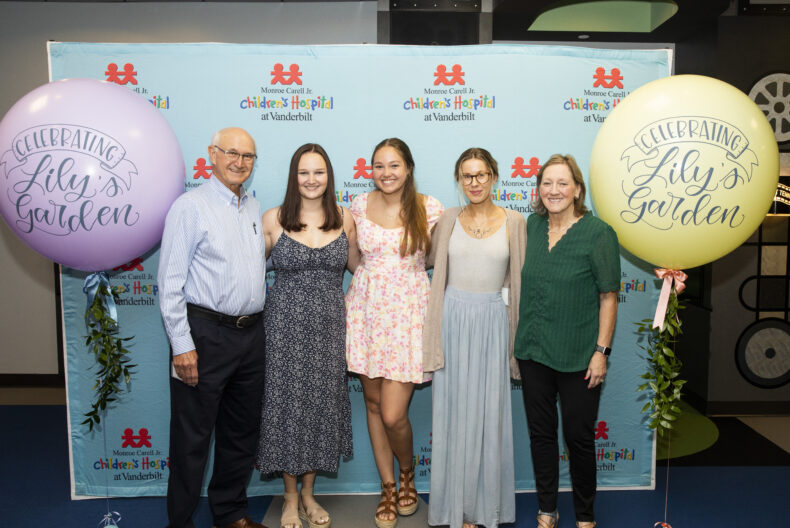
Left to right: Ron Johnston, Lily Hensiek, Sophie Hensiek, Sophia Featherstone and Carol Johnston celebrate Lily’s Garden efforts at Monroe Carell in 2023. (photo by Susan Urmy)
A New Era of Discovery
The newest gift is designed to accelerate the rapid progress in research. The gift will support a directorship to help advance pediatric leukemia care throughout the care continuum, including long-term survivorship; it will also create a directorship in cancer predisposition and precision oncology; and it will provide resources for innovative, high-impact research projects.
Lily Hensiek was honored for raising awareness and funds for pediatric cancer research at the Mary Catherine Strobel Volunteer Awards in 2019. (submitted photo)
Hensiek knows firsthand how life-changing research can be. As a teen, she experienced a rare late relapse of acute lymphoblastic leukemia and benefited from an immunotherapy treatment previously unavailable when she was first diagnosed.
“Immunotherapy wasn’t really even a thing when I was 7 years old,” Hensiek said. “It’s really amazing to see how far research has moved forward.”
For the type of leukemia Hensiek had, cure rates have risen dramatically.
“When Lily was first diagnosed, we said there was probably somewhere around 85% to 90% cure,” Friedman said. “Now, with the same leukemia, due to advances, we’re at almost 98%.”
The program will also support mental health and family-focused initiatives — areas the family believes are essential.
“Childhood cancer affects the whole family,” Featherstone said. “It doesn’t just affect the child or the parent.”
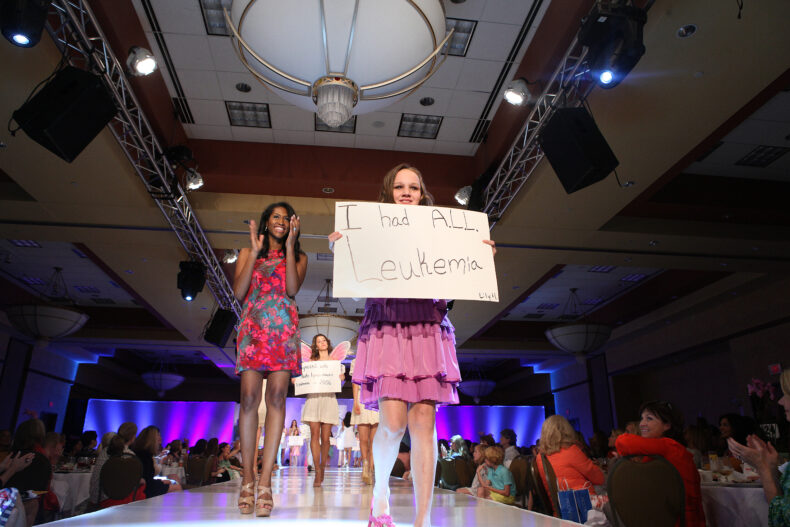
Lily Hensiek models at Friends & Fashion fundraising event in 2013. (photo by Susan Urmy)
A Full-Circle Moment
Today, Hensiek is doing well and preparing for a career in health care. In a full-circle moment, she is studying to be a physician assistant at Kansas State University and will graduate in May 2027. Inspired by the physicians and caregivers who helped save her life, she too hopes to help children with cancer.
She also had the opportunity to do some of her clinical training at Monroe Carell. “It was such a phenomenal experience,” she said. “I’ve been the patient, and now I’ve been the student. That’s kind of wild to think about.”
As Lily’s Garden enters its next chapter, the family hopes the new leukemia program will honor not only Hensiek’s journey, but also the many children and families they have met along the way.
“We just keep going until there’s a cure,” Hensiek said.
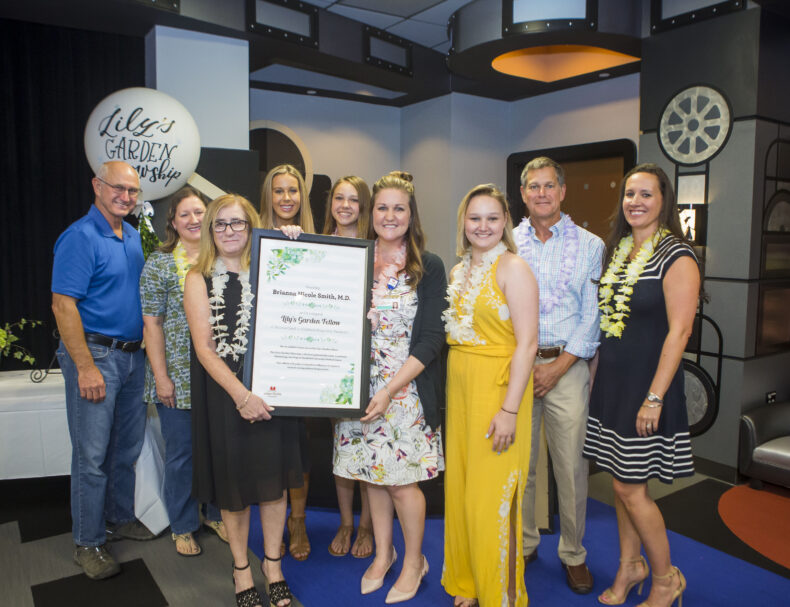
On hand for a celebration of Lily’s Garden initiatives in 2018 were, holding the plaque, Debra Friedman, MD, MS, left, and Brianna Smith, MD, MS; at right, Larisa and Phillip Featherstone with their daughters, Lily, Sophie and Sophia, and at left, Carol and Ron Johnston. (photo by Susan Urmy)
Children with sickle cell disease are more likely than other children to develop a clonal growth of precancerous blood cells called clonal hematopoiesis (CH), which is associated in older people with a higher risk of blood cancer, according to new research from Vanderbilt Health.
However, the clones in children with sickle cell disease did not expand as readily as they do in older people with CH, suggesting that they may be more transitory and have different health consequences, the researchers reported March 26 in the journal Blood.
In addition, hydroxyurea, which reduces painful episodes and the need for blood transfusions in people with sickle cell disease, did not increase the risk of developing CH. That is good news for patients for whom hydroxyurea is “an essential therapy,” the researchers reported.
While questions remain about the link between CH and sickle cell disease, these findings shed light on disruptions in normal blood cell development (hematopoiesis) that may be shared by both diseases.
Chronic hematopoietic stress within the hypoxic (low oxygen), inflammatory bone marrow environment of sickle cell disease may predispose to the accumulation of somatic mutations (in nonreproductive cells) and/or the outgrowth of affected hematopoietic stem cell clones at an earlier age, the researchers hypothesized.
The researchers used a highly sensitive sequencing technique to determine the prevalence of CH in 1,025 children with sickle cell disease, and in a matched control group of 2,957 children without the disease. The results were validated in an independent cohort of 1,293 children with sickle cell disease.
Jessica Ulloa, a graduate student in the Vanderbilt Human Genetics Program, is the paper’s first author.
Contributing equally to the study were the paper’s corresponding author, Alexander Bick, MD, PhD, the Edward Claiborne Stahlman Professor and director of the Division of Genetic Medicine and Clinical Pharmacology at Vanderbilt Health; Michael DeBaun, MD, MPH, the J.C. Peterson, MD Professor of Pediatrics and director of the Vanderbilt-Meharry Sickle Cell Disease Center of Excellence; Santosh Saraf, MD, University of Illinois; and Mitchell Weiss, MD, PhD, St. Jude Children’s Research Hospital.
Other co-authors from Vanderbilt Health were Kristin Wuichet, PhD, Yash Pershad, and Connor Shore.
Support for the study was provided in part by National Institutes of Health grants R01HL168179, T32GM145734 and T32GM007347, and the Vanderbilt Undergraduate Summer Research Program.
The clonal growth of precancerous blood cells known as CHIP (clonal hematopoiesis of indeterminate potential) occurs in 1 in 10 people over age 70. It is known to increase the risk of blood cancer and death from cardiovascular, lung and liver disease.
Last year, researchers at Harvard’s Massachusetts General Hospital reported that CHIP also dramatically increased the risk of inflammatory heart disease. Their study analyzed genomic and health records data from more than 335,000 participants in the England-based UK Biobank.
To validate these findings, Vanderbilt Health researchers analyzed data from more than 361,000 participants in two large U.S. biobanks — one of them, BioVU, based at Vanderbilt Health, and the other, part of the National Institutes of Health’s All of Us Research Program.
Their report, published March 18 in the journal JAMA Cardiology, identified a specific link between CHIP and pericarditis, a potentially life-threatening inflammation of the thin sac surrounding the heart. It suggests that treating patients for the blood condition could reduce their risk of heart inflammation.
Pershad Yash
“Both CHIP and pericarditis are thought to be a result of the same types of inflammation,” said the paper’s first author, Yash Pershad, an MD/PhD student in the lab of Alexander Bick, MD, PhD. “Targeting CHIP-associated inflammation may represent a therapeutic strategy for preventing or treating pericardial inflammation in some at-risk individuals.”
Each year in the United States, an estimated 160,000 people develop pericarditis, which can cause sharp chest pain and often requires hospitalization. The condition, which also is associated with autoimmune disease, cardiac procedures, and infections, can lead to a dangerous buildup of fluid around the heart that impairs heart function.
CHIP is thought to fuel inflammation through specific molecular pathways — including a cellular alarm system called the NLRP3 inflammasome and a signaling protein called interleukin-1beta — that are also central to pericarditis.
Drugs that block these pathways are already approved to treat recurrent pericarditis and potentially could be used as preventive therapy, Pershad noted.
Bick, the paper’s corresponding author, directs the Division of Genomic Medicine and Clinical Pharmacology at Vanderbilt Health. Other co-authors are Kun Zhao, PhD, a postdoctoral researcher in the Bick lab, and Brett Heimlich, MD, PhD, assistant professor of Medicine. The research was supported by National Institutes of Health grants DP5OD029586, R01AG088657 and K08HL171833, a Burroughs Wellcome Fund Career Award for Medical Scientists, a Pew-Stewart Scholar for Cancer Research award, and a Hevolution/AFAR New Investigator Award in Aging Biology and Geroscience Research.
A multi-institutional research team that included genomic scientists from Vanderbilt Health has identified a potential target for blood cancer prevention and treatment.
Their report, published Jan. 1 in the journal Science, could lead to new treatments for blood cancers, which kill an estimated 23,540 people in the United States every year.
The research team, led by scientists from Boston Children’s Hospital, Dana-Farber Cancer Institute, the Broad Institute of MIT and Harvard, and Memorial Sloan Kettering Cancer Center, found that the protein Musashi-2 (MSI2) is essential for the function of blood-forming stem cells.
High levels of MSI2 can support the unchecked growth of abnormal stem cells, a precancerous condition known as clonal hematopoiesis of indeterminate potential, or CHIP.
The researchers used a genome-wide association study (GWAS) meta-analysis to identify a haplotype, or inherited grouping of genomic variants, which reduces MSI2 expression, thereby protecting against CHIP.
To validate these findings in humans, Alexander Bick, MD, PhD, Yash Pershad, and colleagues leveraged Vanderbilt Health’s DNA biobank, BioVU, the world’s largest repository of genetic material linked to de-identified electronic health records based at a single academic center.
By analyzing a unique longitudinal cohort of 3,000 patients with genetic sequencing performed approximately six years apart, the Vanderbilt Health team tested whether a variant which reduced the expression of MSI2 protected against the expansion of precancerous mutations.
Patients who carried the protective variant had precancerous clones that grew significantly more slowly than those without the variant. In many of these patients, the abnormal cells were transient; that is, they disappeared entirely over the study period rather than expanding into cancer.
“Most genetic studies only provide information from a snapshot in time, but the longitudinal samples in BioVU allowed us to study the mutations over six years,” noted Pershad, an MD/PhD student in the Bick lab, who with Bick is among the paper’s co-authors.
“We could clearly see that in people with the protective variant, precancerous clones behaved fundamentally differently than we expected — they shrunk or disappeared rather than expanding and becoming cancer,” Pershad said.
While CHIP results from somatic (acquired) blood stem cell mutations, this protection against it is inherited. This human genetic evidence suggests a potential way to prevent blood cancer by targeting MSI2 through small molecule inhibition or genome editing.
“More broadly,” the researchers concluded, “we provide an example of how resilience to cancer can arise through inherited genetic variation, motivating the search for other natural pathways that could be leveraged to prevent or treat malignancy.”
Bick, the Edward Claiborne Stahlman Professor, associate professor of Medicine, and director of the Division of Genetic Medicine and Clinical Pharmacology at Vanderbilt Health, is internationally known for his research on the genetics of blood disorders.
His research is supported in part by National Institutes of Health grants DP5OD029586, R01AG088657 and R01AG083736, a Burroughs Wellcome Fund Career Award, a Pew-Stewart Scholar for Cancer Research award, and a Hevolution/AFAR New Investigator Award in Aging Biology and Geroscience Research.
One person in 10 over the age of 70 will experience an explosive, clonal growth of abnormal blood cells, called clonal hematopoiesis of indeterminant potential or CHIP, that increases the risk of blood cancer and death from cardiovascular, lung and liver disease.
The risk of blood cancer differs significantly, however, depending upon whether patients with CHIP also develop cytopenia (low blood cell count).
An analysis of genetic sequencing data from more than 34,000 people over a 17-year period by researchers at Vanderbilt University Medical Center has found that persistent cytopenia appears to be a critical step in the progression of CHIP to blood cancer.
For patients with CHIP who developed cytopenia, the risk of progression to blood cancer was 10 times higher than it was for patients without cytopenia — a 1-in-200 chance per year versus 1 in 2,000, the researchers report in the June 2025 issue of the Lancet journal, eClinicalMedicine.
These findings suggest that checking blood counts regularly may be an effective way to monitor patients with CHIP for their risk of developing blood cancer, and cytopenia-free survival may be a valuable endpoint for clinical trials aimed at preventing blood cancer in these patients.
Alexander Bick, MD, PhD
“This work is the largest longitudinal analysis of its kind and provides a roadmap for identifying high-risk CHIP patients who may benefit from closer monitoring or early intervention,” said the paper’s corresponding author, Alexander Bick, MD, PhD, associate professor of Medicine and director of the Division of Genetic Medicine at VUMC.
“It also lays the groundwork for more feasible and targeted clinical trials in blood cancer prevention,” he said.
Bick is internationally known for his research on the genetics of blood disorders. He and his colleagues have advanced the understanding of somatic (non-inherited) mutations in blood stem cells that can trigger a potentially life-threatening clonal growth of abnormal cells known as CHIP.
Blood cancer (myeloid neoplasm) results from the abnormal growth of myeloid (blood) cells in the bone marrow. The current study compared blood cancer rates in patients with CHIP who did not develop cytopenia, to those with both CHIP and concurrent, clonal cytopenia of undetermined significance.
Led by the paper’s first authors, James Brogan, MD, MS, a resident physician in the Department of Medicine, and Ashwin Kishtagari, MD, assistant professor of Medicine in the Division of Hematology and Oncology, the study required large numbers.
The researchers pulled genetic sequencing data from three major population-level cohorts: the National Institutes of Health (NIH) All of Us Research Program, the UK (United Kingdom) Biobank and VUMC’s biobank, BioVU.
With roughly 350,000 DNA samples collected to date, BioVU is the world’s largest repository of genetic material linked to de-identified electronic health records (EHRs) based at a single academic center.
Access to whole genome sequences linked to EHRs for more than 107,000 adults enrolled in BioVU between 2006 and 2023 was provided through the Alliance for Genomic Discovery (AGD), a unique endeavor to accelerate the application of large-scale genomics to biomedical science and therapeutic development.
Launched in 2022 by Nashville Biosciences LLC, a wholly owned VUMC subsidiary, and the global DNA sequencing giant Illumina Inc., AGD now includes eight major pharmaceutical companies that support the development and availability of whole genome sequences for research aimed at identifying disease associations and targets for intervention.
The report in eClinicalMedicine “is one of the first papers to leverage data from the BioVU/Alliance for Genomic Discovery whole genome sequencing effort,” Bick said. “It also highlights how at VUMC medical trainees are doing cutting-edge research while developing as physicians.”
Between the three biobanks, the researchers had access to 805,000 whole genome sequences. From this pool, they identified 8,114 individuals with CHIP who did not develop cytopenia and 1,260 who did. These 9,374 cases were matched with 24,749 controls who did not have CHIP.
The annual blood cancer progression rate for participants with CHIP who did not develop cytopenia was nearly the same as the rate observed in the control population without CHIP (0.06% versus 0.04%), whereas the rate was 10 times higher for those with both CHIP and cytopenia (0.5% per year).
Approximately 13% of participants with CHIP developed a cytopenia within five years. Men, smokers and older individuals (over 64) were at a higher risk of developing cytopenia, as were those who had two or more mutations or any high-risk mutations associated with CHIP.
“Given the substantial risk of cytopenia, patients with multiple high-risk features may benefit from regular monitoring for cytopenia progression,” the researchers concluded. The good news is that this five-year window before the development of cytopenia and blood cancer “provides an opportunity for early intervention with potential disease-modifying therapies,” they wrote.
Treatments for cytopenia range from drugs that stimulate the production of certain blood cell types to bone marrow or stem cell transplants.
Co-authors from the Bick lab included rheumatology fellow Robert Corty, MD, PhD, Yash Pershad, an MD-PhD student, and Brian Sharber, MS. Other VUMC co-authors included faculty members Brett Heimlich, MD, PhD, Leo Luo, MD, Brent Ferrell Jr., MD, Michael Savona, MD, and Yaomin Xu, PhD.
This research was supported by NIH grants DP5OD029586, R01AG088657, R01AG083736, and P30CA068485, the Burroughs Wellcome Fund Career Award for Medical Scientists, the Edward P. Evans Foundation, and the Pew Charitable Trusts and the Alexander and Margaret Stewart Trust.
Savona holds the Beverly and George Rawlings Directorship. Bick is supported in part by a Hevolution/AFAR New Investigator Award in Aging Biology and Geroscience Research, and Brogan is supported in part by an American Society of Hematology HONORS Award.