Patient with melanoma receives tumor-infiltrating lymphocyte therapy

Submitted by vicc_news on

Vanderbilt-Ingram Cancer Center has treated its first patient in a newly launched therapy program that magnifies the power of a person’s natural defense system against tumors. 

Tumor-infiltrating lymphocyte (TIL) therapy involves isolating the white blood cells from a tumor after it is surgically removed, expanding the magnitude of those cells in a laboratory, and then infusing them back into the patient to elicit a more powerful counterattack. The highly personalized treatment is currently approved for patients with advanced stages of melanoma whose tumors have grown despite immunotherapies and/or targeted therapies. 

The patient who received the therapy in late January has melanoma that has spread to the bone, abdomen, liver and brain despite multiple lines of other treatments. A team of clinicians harvested white blood cells from a tumor in the patient’s liver, then shipped them to a laboratory where they were supercharged before being infused back into the patient, who is being monitored. Additional patients are scheduled to receive TIL therapy. Vanderbilt-Ingram launched the program as a standard of care service line after previously treating patients with TIL therapy in clinical trials. 

“The mission of Vanderbilt Health is to get treatments that are cutting-edge to the patients who need them the most,” said Olalekan Oluwole, MBBS, MPH, associate professor of Medicine and a hematologist who specializes in cellular therapies. “Some of these patients have exhausted prior standard of care options.” 

About a third of patients who receive TIL therapy respond to it. 

“On the surface that doesn’t sound like a lot, but the great thing about TIL therapy is when it does work, it can lead to long-term durable response. It can keep right on working for years or even indefinitely,” said Douglas Johnson, MD, MSCI, professor of Medicine and clinical director of melanoma, who holds the Susan and Luke Simons Directorship. 

Establishing the TIL program required assembling a team of multidisciplinary clinicians trained to handle the care needs of patients while simultaneously handling the logistics of getting their white blood cells shipped to a laboratory. 

Sarah Moseley, BSN, RN, the coordinator for immune effector cell and gene therapy patient care, led that process. She described the process of navigating care for patients who receive TIL therapy, which involves surgeons, oncologists, hematologists and specialized nurses. 

“I am with the patient from start to finish,” Moseley said. “Once a patient is identified by Dr. Johnson, he immediately gets me involved. The patient has to be approved by our cell therapy team and our surgery team as well as Dr. Johnson to make sure that they’re a good candidate. The next step is the insurance process, which is probably the hardest part because this is a new and expensive therapy. It is a detailed process involving our financial team, our managed care team and us nurses as well.” 

The nurses serving as patient care coordinators also include Leslie Mader, BSN, RN, OCN, and Brittney Baer, BSN, RN.  

“I or one of my nurse colleagues go to the surgery, and we transport the specimen from the operating room to the processing lab, where a courier picks it up,” Moseley said. “Without the specimen, there is no product for the therapy. It has to be done quickly, and it must be done right every time. Then we get the patients set up for cell infusion after about five to six weeks.” 

The launch of the TIL program is the latest achievement in cellular therapies for Vanderbilt-Ingram, which is an international leader in the field. The cancer center offered clinical trials for therapies, which became standards of care, most notably CAR-T, which is shorthand for chimeric antigen receptor T-cell therapy. Vanderbilt-Ingram established an outpatient protocol for patients to receive CAR-T and treats more patients with this immunotherapy than any other provider in the state. It is offering clinical trials to expand the treatment for additional types of cancer and to make it more easily accessible to patients. 

“The launch of our TIL program represents a natural and important evolution of Vanderbilt-Ingram’s leadership in cellular therapy,” said Ben Ho Park, MD, PhD, the Benjamin F. Byrd Jr. Professor of Oncology, professor of Medicine and director of Vanderbilt-Ingram Cancer Center. “Building on the infrastructure, clinical expertise and multidisciplinary coordination established through our CAR-T program, we are now able to offer another highly personalized immunotherapy to patients with otherwise limited options. Our goal is not only to deliver these complex therapies safely and effectively, but also to continue advancing the science so that more patients, across more cancer types, can benefit in the years ahead.” 

Clinicians with the cellular therapy team built the TIL program on the foundation of the CAR-T program. However, there are major differences between these treatment modalities. With CAR-T, immune cells are reengineered to attack cancer from the T cells in a patient’s blood. With TIL therapy, white blood cells are taken from a patient’s tumor and are then multiplied so they can stage a better counterattack against cancer. 

Currently, CAR-T is approved by the Food and Drug Administration only for certain blood cancers. TIL therapy is approved only for advanced melanoma when patients have not responded to other treatments. However, clinical trials are underway to expand the therapies for other types of cancers.  

The post Patient with melanoma receives tumor-infiltrating lymphocyte therapy appeared first on Vanderbilt Health.
This phase III single arm trial determines whether taking prophylactic letermovir will reduce the likelihood of infection with cytomegalovirus (CMV) in children and adolescents after stem cell transplant compared to estimated rate of infection without prophylaxis. The treatments used to prepare for HCT reduce the body's natural infection-fighting ability and increase the likelihood of an infection with a virus called cytomegalovirus. "Prophylaxis" means to take a drug to prevent a disease or side effect. Letermovir is an antiviral drug that stops cytomegalovirus from multiplying and may prevent cytomegalovirus infection and make the disease less severe.

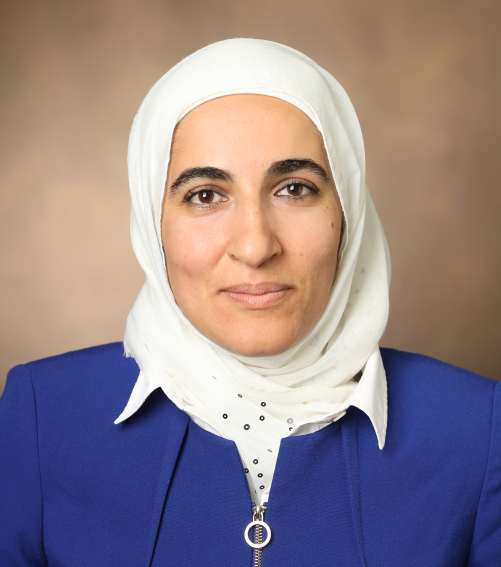
Ghadeer Dawwas, Ph.D., M.B.A., M.S.

  • Assistant Professor of Medicine, Division of Epidemiology
  • Assistant Professor of Health Policy

Ghadeer Dawwas, Ph.D., M.B.A., M.S.

  • Assistant Professor of Medicine, Division of Epidemiology
  • Assistant Professor of Health Policy

ghadeer.dawwas@vumc.org

Research Program

Research Description

Have any questions? Contact Us 1-877-936-8422 for more information

Mohamed Shanshal, M.D.

  • Assistant Professor of Medicine, Division of Hematology and Oncology

Mohamed Shanshal, M.D.

  • Assistant Professor of Medicine, Division of Hematology and Oncology

mohamed.shanshal.1@Vanderbilt.Edu

Research Program

Research Description

Have any questions? Contact Us 1-877-936-8422 for more information

Kristina Shaffer, M.D.

  • Assistant Professor of Surgery, Division of Surgical Oncology and Endocrine Surgery

Kristina Shaffer, M.D.

  • Assistant Professor of Surgery, Division of Surgical Oncology and Endocrine Surgery

kristina.shaffer@vumc.org

Research Program

Research Description

Have any questions? Contact Us 1-877-936-8422 for more information

Jeffrey Spraggins, Ph.D.

  • Scientific Director, Bioanalytic and Proteomics Shared Resource, VICC
  • Director, Mass Spectrometry Research Center
  • Associate Professor of Cell and Developmental Biology, Biochemistry, Chemistry, and Pathology, Microbiology and Immunology

Jeffrey Spraggins, Ph.D.

  • Scientific Director, Bioanalytic and Proteomics Shared Resource, VICC
  • Director, Mass Spectrometry Research Center
  • Associate Professor of Cell and Developmental Biology, Biochemistry, Chemistry, and Pathology, Microbiology and Immunology

jeff.spraggins@Vanderbilt.Edu

Research Program

Have any questions? Contact Us 1-877-936-8422 for more information

Vanderbilt Health celebrates milestone for novel histotripsy procedure 

Submitted by vicc_news on

Vanderbilt Health recently performed its 100th histotripsy, a noninvasive procedure in which highly focused ultrasound waves are directed at liver tumors to destroy cancer without ever making an incision. 

The recipient, Aaron Davis of Cleveland, Tennessee, had just celebrated his 52nd birthday days before the procedure and was surrounded in the Vanderbilt University Hospital operating room by a surgical team he’s come to greatly admire. 

Sekhar Padmanabhan, MD, assistant professor of Surgery, performed the procedure, in which a tub of water held over Davis’ abdomen served as the medium through which the ultrasound waves passed. In histotripsy, the focused ultrasound energy causes small gas bubbles in the tissue to rapidly expand and contract. This process forms a “bubble cloud,” forcing the targeted tumors to be liquified while avoiding damage to other tissue. 

“Histotripsy is a novel procedure, but one that shows a great deal of promise,” said Padmanabhan. “Thanks to generous philanthropic support, we’re building a world-class program to continue offering this technology to patients who can benefit from a noninvasive surgical option that yields excellent results.”  

Vanderbilt-Ingram Cancer Center is among the first institutions to offer histotripsy. Appealing to patients for its noninvasive nature, it avoids many of the traditional drawbacks of surgeries that use incisions, including pain management. 

“When I had my liver resection, that was some of the worst pain I’ve ever felt in my life,” said Davis. “And I’m allergic to many pain medications, too. Being able to get put to sleep for surgery and wake up without the pain of having my abdomen cut open changes everything.” 

Davis had previously been in Padmanabhan’s care to receive a hepatic artery infusion pump, which successfully delivered high doses of chemotherapy to his liver while minimizing toxicity to the rest of his body. And although the cancer returned, Davis knew he was in good hands with Padmanabhan and Kristen Ciombor, MD, MSCI, associate professor of Medicine in the Division of Hematology and Oncology, who eventually helped him settle on histotripsy as the best option to treat his latest recurrence of cancer. 

“The doctors at Vanderbilt-Ingram Cancer Center changed my life,” said Davis. “Having a care team who knew exactly what I needed and recognized that a newer procedure could help me has given me hope that I can continue fighting cancer.” 

The post Vanderbilt Health celebrates milestone for novel histotripsy procedure  appeared first on Vanderbilt Health.
Michael LeCompte, M.D.

  • Assistant Professor of Surgery, Division of Surgical Oncology and Endocrine Surgery

Michael LeCompte, M.D.

  • Assistant Professor of Surgery, Division of Surgical Oncology and Endocrine Surgery

michael.t.lecompte@vumc.org

Research Program

Research Description

Have any questions? Contact Us 1-877-936-8422 for more information

Asheley Chapman, Ph.D.

  • Assistant Professor of Chemical and Biomolecular Engineering

Asheley Chapman, Ph.D.

  • Assistant Professor of Chemical and Biomolecular Engineering

asheley.chapman@Vanderbilt.Edu

Research Program

Have any questions? Contact Us 1-877-936-8422 for more information

Wife of cholangiocarcinoma patient makes gift in honor of husband

Submitted by vicc_news on
Kristen Ciombor, MD, MSCI, left, with Sallie Bailey (courtesy/Sallie Bailey)

When Sallie Bailey’s husband, John Bailey, was diagnosed with cholangiocarcinoma (bile duct cancer) in July 2018, the news came as a shock. Just months earlier, his physical appearance showed no difference.

The first sign was subtle: jaundice in one eye. The jaundice quickly spread throughout John’s entire body, the point at which he and Sallie met with Benjamin Womack, MD, associate professor of Clinical Medicine. Despite the care of Womack, Patrick Yachimski, MD, MPH, professor of Medicine, and Kristen Ciombor, MD, MSCI, associate professor of Medicine, John passed away in November 2018, only four months after his diagnosis.

“Until the jaundice appeared, there were no symptoms,” Sallie recalls. “It’s a silent disease, and by the time it’s detected, it’s often too late.”

John was more than a patient at Vanderbilt-Ingram Cancer Center. He was a man with a passion for good food and wine. A talented chef, he worked in San Francisco, Chicago, France, and Washington, D.C., before retiring from professional kitchens. Even then, he continued creating memorable meals for family and friends and sought out locally owned restaurants and new wines to enjoy. His welcoming smile made everyone feel special, and he loved traveling, especially to California wine country.

After moving to Nashville in 2011, Sallie and John chose Vanderbilt Health for their care because they valued being part of a teaching hospital. That decision connected them to a team of experts who provided compassionate care during an incredibly difficult time. Sallie’s experience inspired her to take action. Today, she supports research led by Ciombor and Yachimski, hoping to help scientists detect cholangiocarcinoma earlier and slow its progression.

“Ultimately, I hope researchers will find a way to treat the cancer so that it isn’t a death sentence,” Sallie says. “Dr. Yachimski and Dr. Ciombor have both told me their goal is to work themselves out of a job. I admire and support that goal.”

Through her gifts, Sallie honors John’s legacy in a deeply meaningful way. Her support helps researchers pursue earlier detection methods, develop treatments that slow disease progression, and improve quality of life for patients. It also fuels innovation in clinical trials and provides hope for families facing rare cancers like cholangiocarcinoma. Every contribution moves science closer to a future where this diagnosis is no longer a death sentence.

“Particularly for a rare tumor type such as cholangiocarcinoma, contributions like Sallie’s propel our understanding of the molecular underpinnings of these tumors forward and set the stage for future therapeutic advances,” Ciombor said. “Philanthropic support such as Sallie’s provides critical resources at a time when patients with cancer need better treatment options more than ever.”

Learn more about supporting cancer research and making a gift by clicking here. When making a gift, please write in the comment field that you’d like your donation to support cholangiocarcinoma initiatives.

The post Wife of cholangiocarcinoma patient makes gift in honor of husband appeared first on Vanderbilt Health.
Subscribe to