
About Clinical Trials at Vanderbilt-Ingram

Clinical Trials Designed to End Cancer
We are committed to advancing cancer care through innovative clinical trials that help bring new and improved treatment options to patients. People choose Vanderbilt-Ingram Cancer Center for our extensive portfolio of clinical trials, including a robust Phase I program, access to nationally recognized specialists, and a dedicated team that helps guide patients throughout their care journey.
Clinical trials play a critical role in identifying and understanding diseases, improving disease management, preventing illness, evaluating the safety and effectiveness of new treatments, and ultimately finding better ways to treat and cure cancer.
Understanding the Phases of Clinical Trials
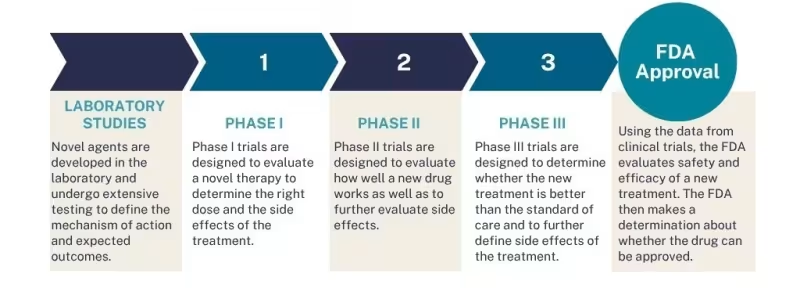
Clinical trials evaluate new approaches to cancer care, including medications, therapies, diagnostic tools, and innovative treatment techniques. These studies help researchers determine whether new treatments are safe and effective before they become standard of care.
Phase I Evaluates the safety of a new treatment, determines dosage levels, and identifies potential side effects.
Phase II Examines how well a treatment works for a specific type of cancer while continuing to monitor safety.
Phase III Compares a new treatment with the current standard of care to determine which approach produces better outcomes.
Phase IV Conducted after a treatment receives approval to monitor long-term effectiveness, safety, and side effects in a larger patient population.
Every cancer treatment used today was once studied in a clinical trial, helping advance care for future generations of patients.
Frequently Asked Questions
What is the purpose of clinical trials?
Clinical trials help researchers develop better ways to prevent, diagnose, and treat cancer. They are essential for determining whether promising discoveries made in the laboratory can safely and effectively improve patient care. Every standard cancer treatment available today was first evaluated through a clinical trial.
Why should I consider participating in a clinical trial?
Clinical trials provide access to innovative treatments and new approaches to managing cancer and treatment-related side effects. Participation is a personal decision that should be made after discussing your diagnosis, treatment options, and goals with your oncology team.
Are there any drawbacks to joining a clinical trial?
Clinical trials often involve treatments that are still being studied, which means there may be less information available about their effectiveness and potential side effects. Some studies may also require additional clinic visits, blood tests, imaging, biopsies, or other procedures beyond what is typically required with standard treatment.
How can I find a clinical trial?
The best way to learn about clinical trial opportunities is to speak with your physician. You can also search for studies through the Vanderbilt-Ingram Cancer Center Clinical Trials webpage or visit ClinicalTrials.gov to explore studies available worldwide. Every trial has specific eligibility requirements, so it is important to discuss potential options with your care team.
How much does participation cost?
In many cases, the study sponsor, such as a pharmaceutical company, research cooperative group, or funding agency, covers costs related to the investigational treatment and study-specific procedures. Standard medical care and routine treatments are generally billed to insurance. Your research team will review any potential costs with you before you enroll.
How long does treatment last? How often will I need to visit?
Treatment schedules vary by study. Some clinical trials continue treatment as long as it is helping and side effects remain manageable, while others involve a specific number of treatment cycles.
Visit schedules also differ from study to study. Your research team will provide a clear schedule outlining expected appointments, tests, and treatments before you begin.
What are the risks and side effects?
The risks and side effects depend on the specific clinical trial and treatment being studied. Because some therapies are new, less may be known about their side effects. Before enrolling, your care team will review potential risks, answer your questions, and provide instructions on whom to contact if side effects occur.
What does informed consent mean?
Before joining a clinical trial, you will receive a detailed informed consent document that explains the purpose of the study, possible benefits and risks, study procedures, and your rights as a participant. You will have time to review the information, discuss it with your physician and loved ones, and ask questions before deciding whether to participate.
Will I receive a placebo?
Most cancer clinical trials do not use a placebo alone in place of treatment. If a placebo is part of a study, the details and purpose will be clearly explained during the informed consent process. Your care team can help you understand how the study is designed and what treatment options you may receive.
What are some common misconceptions about clinical trials?
One common misconception is that clinical trials are only a last resort. In reality, clinical trials are available across many stages of cancer care and at all points along the treatment journey. Some patients participate in a trial as their first treatment, while others may enroll later depending on their diagnosis and treatment goals.
Eligibility
If you are a patient, please call us at (615) 936-8422 to set up an appointment with a provider to learn about clinical trial options.
If you are a referring provider, please call us at (615) 936-8422 or use Vanderbilt Health Connect to make referrals or communicate with your patients’ Vanderbilt care team.
Participation
Prior to their initiation, clinical trials undergo a rigorous evaluation process by the U.S. Food and Drug Administration (FDA), the Vanderbilt-Ingram Cancer Center Scientific Review Committee (SRC), and the VUMC Institutional Review Board. Patients, with advice from their provider, decide whether to participate in a clinical trial. Patients learn about both the risks and benefits of the study before making a decision. Any questions a patient has about the study will be answered.
News About Clinical Trials
Cancer
How ‘mismatched donors’ are opening new doors for blood cancer patients
The ACCESS trial allowed mismatched, unrelated donors for blood cancer patients who didn’t have a perfect match for a stem cell transplant; the trial enrolled a more varied…

Cancer
Study: Lung biopsy cryoprobe increases diagnostic yield over standard forceps
The FROSTBITE-2 trial used the 1.1-millimeter cryoprobe which, unlike the larger probes, is small enough to remove the biopsy specimen through the working channel without having…

Cancer
New research: Heart drug may also limit the spread of cancer
For the past 20 years, Vanderbilt Health researchers have been studying ifetroban for its potential to treat conditions ranging from fibrotic lung disease to heart failure in…