
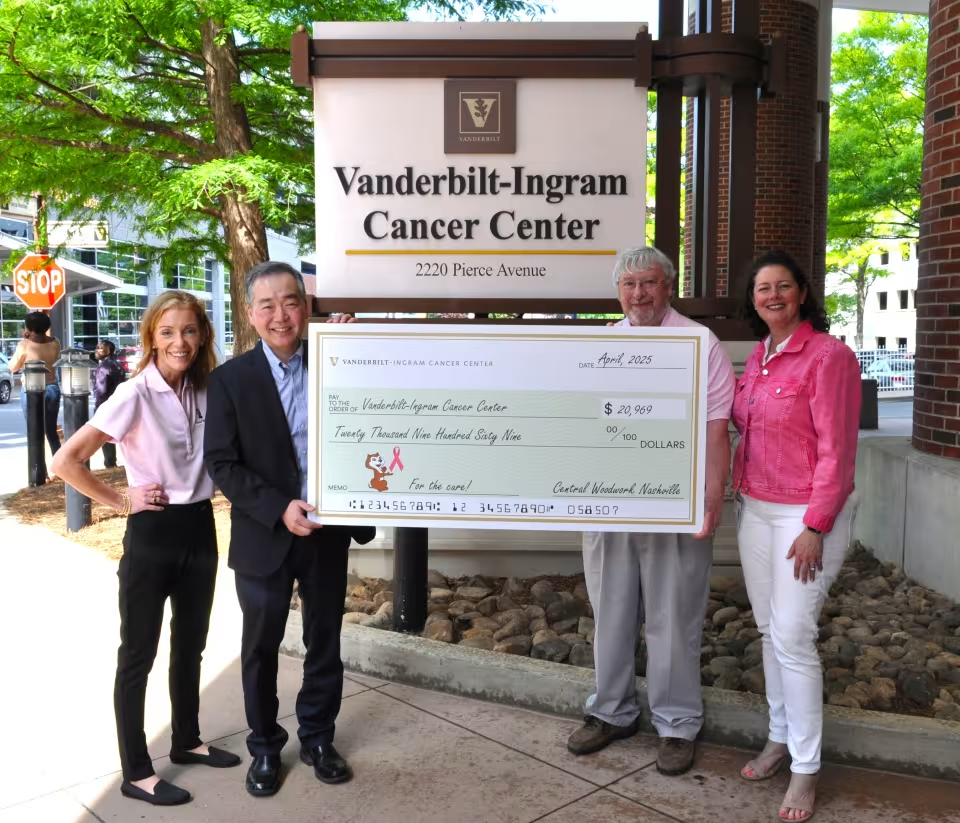
Impact of Giving
History of Giving
Vanderbilt-Ingram has a rich history of giving that helped establish the Cancer Center. Philanthropic gifts may also kick-start early-career scientists' initial research, establish lab spaces for discovery, or aid patient support initiatives.
The Ingram Family
In 1999, the family of the late E. Bronson Ingram pledged a transformational gift to name the Vanderbilt-Ingram Cancer Center, and Orrin H. Ingram II led a successful fundraising campaign to advance the fight against cancer. However, the Ingrams' support of the Vanderbilt-Ingram Cancer Center began before our recognition as an NCI-designated cancer center and before this transformative gift. Some of that support included the establishment of the Hortense B. Ingram Professorship of Molecular Oncology in honor of E. Bronson Ingram’s mother, who died of cancer, and the funding of recruitment of key faculty and several innovative pilot cancer research projects. After his father's death, Orrin H. Ingram II became actively involved with the Vanderbilt-Ingram Cancer Center's Board of Advisors. Before taking the helm as the board's chairman in November of 1999, he chaired its development committee, established a program to raise private donations for "discovery grants" to fund innovative new research, and launched a series of educational lunch programs to promote cancer research awareness.
The A.B. Hancock Jr. Memorial Laboratory for Cancer Research
When Waddell Walker Hancock founded the A.B. Hancock Jr. Memorial Laboratory for Cancer Research in 1972, she was determined that the right combination of imagination, perseverance, and scientific talent could win the fight against cancer.

Hancock Lab researchers have earned many national honors and 23 patents for their studies of the role of inflammation in the progression of cancer and as a target for prevention and early detection. The initial impact was on colon cancer but very recent projects focus on prostate cancer and pancreatic cancer.
Evolving from the foundational work of the Hancock lab, the Vanderbilt-Ingram Cancer Center and the Vanderbilt Institute of Chemical Biology have earned national acclaim for translational research that moves discovery from the lab to benefit patients at the bedside. Today Vanderbilt-Ingram discoveries in cancer genetics are saving lives through precision cancer medicine that precisely targets therapy based on tumor characteristics for patients with melanoma and cancers of the lung, colon, and breast.
More potent cancer medicines are on the horizon as Vanderbilt-Ingram researchers identify promising candidates by designing novel molecules that effectively inhibit notoriously “undruggable” mutations found commonly in many cancers and drug-resistant tumors. This research could ultimately lead to treatment for many different types of cancer.
These groundbreaking innovations testify to the wonderful impact achieved by a remarkable family and friends working closely with Vanderbilt scientists. Their collective determination is offering cancer patients a brighter hope for the future.
Hancock News and Features
Momentum magazine • Winter 2013
Thoroughbreds: In horse breeding and cancer research Hancock family aims to win
02/22/18
Mitochondrial mutations and disease
10/02/15
The yin and yang of COX-2
06/17/15
Lit up COX-2 cancer probe
The Robert J. Kleberg, Jr. and Helen C. Kleberg Foundation Center for Personalized Cancer Medicine
For nearly two decades, the generous support from the Robert J. Kleberg, Jr. and Helen C. Kleberg Foundation has played a pivotal role in Vanderbilt-Ingram Cancer Center's ability to impact cancer discovery.
Due to a long-term investment in basic and translational cancer science, support from the Robert J. Kleberg, Jr. and Helen C. Kleberg Foundation has enabled Vanderbilt to emerge as an international leader in the early detection of cancer and precision cancer medicine — matching the right therapy to the right patient at the right time.
Programs in molecular imaging and genomics-based medicine have led to novel findings and more effective therapies for treating patients with head and neck cancers, leukemia, brain tumors, lung cancer, melanoma, and a host of other cancer types.
Moreover, this partnership has served as a catalyst for additional funding from extramural sources that extend the scope and impact of our work.
The support from the Robert J. Kleberg, Jr. and Helen C. Kleberg Foundation serves as a key ingredient in our mission to prevent, control, and cure cancer and to have the greatest possible impact on the health and well-being of cancer patients and their families.
Francis Williams Preston Lab
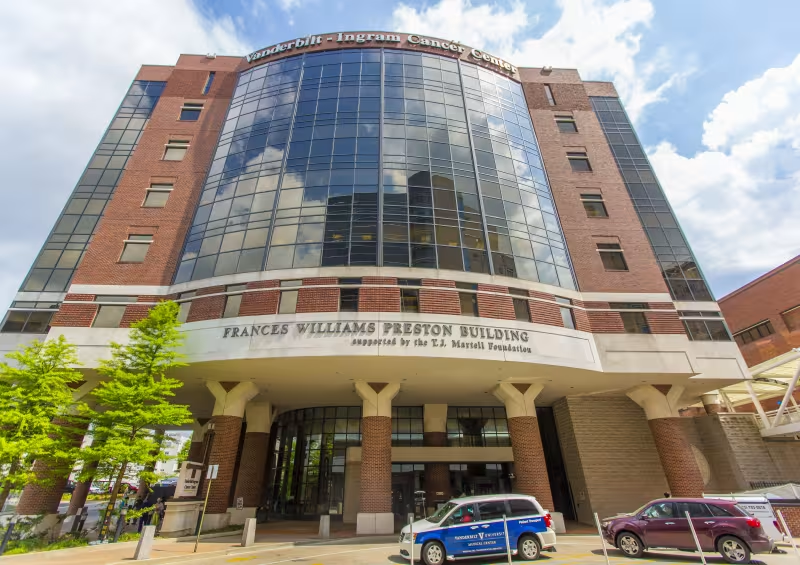
The T.J. Martell Foundation became an important partner to the Vanderbilt-Ingram Cancer Center in 1993, when the Martell Foundation established the Frances Williams Preston Laboratories. These “laboratories without walls” were created in honor of Frances Preston — the late music industry icon and former president of the Martell Foundation's board — and served as an important cornerstone in the creation of the then-new Vanderbilt Cancer Center.
Since that time, this marriage of music and medicine has led to important discoveries in the fight against cancer and built an important foundation for even greater advances in the years ahead. We have remained true to our commitment to deploy the resources provided by the Martell Foundation in ways that will have the greatest impact. We’re exploring the most innovative frontiers of cancer research, from nascent research in genetic approaches in the labs’ early days to our current focus on proteomics and early detection and prevention.
Directed by Dr. Harold L. Moses, the founding director of our cancer center, the Preston Laboratories include the work of 20 senior scientists with active funding from the National Institutes of Health, the U.S. Department of Defense, and the pharmaceutical industry.
The impact of T.J. Martell Foundation is not only felt throughout our cancer center, but also across the country and around the world through MyCancerGenome (opens in a new tab). We look forward to future discoveries for better treatments, earlier detection, and cancer prevention.
Amy Baker Lab
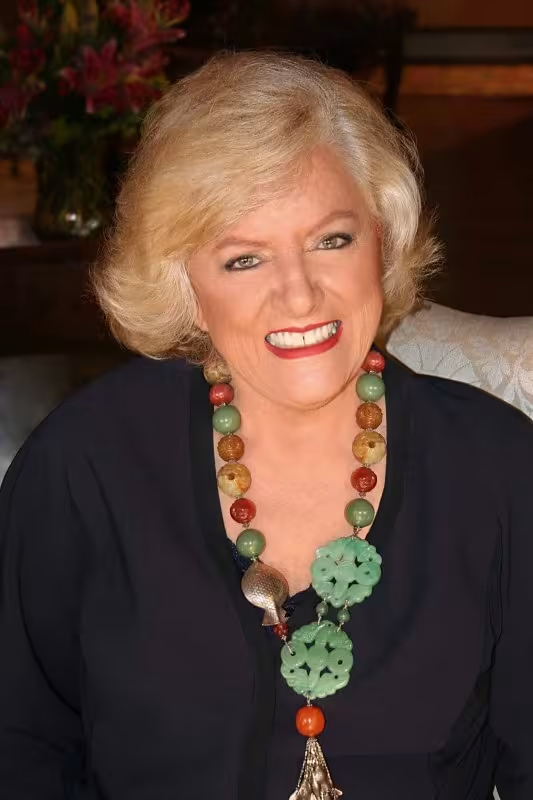
Amy Baker was a media executive, entrepreneur, and advocate whose famously open arms (and open door) made her home a nexus point connecting thought leaders from across the worlds of media, politics, and philanthropy. She was a dedicated supporter of breast cancer research at Vanderbilt Health, along with her family.
She showed an early interest in media, anchoring the local cable television system when she was only a high school student. She graduated from American University, where she studied communications and played on the tennis team. While in college, she began her 20-year career with NBC in Washington D.C., before eventually relocating to Los Angeles, where she held various management positions, including Director of Program Production and Preparation.
In 1994, she married the love of her life, Barry Baker. As much as Amy relished her success in the media industry, her favorite job was raising her three children — Brandace, Bryce, and Lane — with whom she moved and made her home in Park City, Utah.
Community was of paramount importance to Amy, as demonstrated by her sustained involvement and recognition. She served on numerous boards dedicated to the arts, health, and education throughout her life, including at Temple Har Shalom, Image Reborn, and Rowland Hall, in the local area. Amy co-owned and built Jupiter Bowl, envisioning bringing families and friends of all ages together. Over the years, she opened her home to thousands of Utah residents to engage with powerbrokers and cultural influencers from across the worlds of politics and entertainment.
Three awards commemorate her generosity. First, Amy received the Temple Har Shalom Habonim Award in recognition of her continued devotion and contribution as a community builder. Second, she was the recipient of the first Image Reborn Celebration of Life Award. Lastly, Amy’s generosity and service inspired the People’s Health Clinic to create the Amy Baker Lifetime of Giving Award to forever commemorate people who emulate her purpose. While battling cancer for 16 years, she continued to find a friend in everyone she met. Amy lived her life intending to make the world a better place for her having been in it, and she did so with unending grace.
Honor Amy Baker’s Legacy
To make a gift to advance innovative breast cancer research in Amy’s honor and help further the Baker family’s legacy of making a meaningful difference for those facing the life-changing effects of cancer, please Give Now.
Ambassador Discovery Grants by the Numbers
Ambassador Discovery Grants
The Vanderbilt-Ingram Ambassadors program was a volunteer group of young professionals who raised money to award grants for high-risk, high-reward cancer research to promising investigators. This group raised more than $1.5 million for grants through personal contribution, events, and peer-to-peer fundraising. Ambassador investments led to more than $45 million in funding from the National Cancer Institute and other external funding sources, as well as hundreds of publications.
Stacey Huppert, PhD
Targeting Notch Signaling with Small Molecules
Ryoma (Puck) Ohi, PhD
On the Hunt for the Achilles’ Heel of Mitotic Human Cancer Cells
Christopher Chad Quarles, MD
Early Detection of Glioma Treatment Response Using MRI-Based Biomarkers
Christopher S. Williams, MD, PhD
BVES Interacting Proteins in Cancer
Jonathan Irish, PhD
Activating Anti-Tumor Immunity in Combination with Targeted Therapy
Rebecca Ihrie, PhD
Spatial Patterning and Tumor Development in the Brain
Melissa Skala, PhD
Optical metabolic imaging of treatment response in cancer
Ken Lau, PhD
Unraveling the cellular heterogeneity of solid tumors
Carlos Lopez, PhD
A Modeling Framework to Explain and Predict Cell-Death Signal Processing in Cancer
Bryan Venters, PhD
Gene Regulatory Pathways in Human Leukemia
Christine Lovly, MD, PhD
Small Cell Lung Cancer-Innovative Approaches to Study a Recalcitrant Cancer
Jason MacGurn, PhD
Harnessing Protein Degradation to Fight Cancer
Patrick Grohar, MD, PhD
Targeting the “Undruggable” for the Treatment of Pediatric Sarcoma
Javid Moslehi, MD
Induced pluripotent stem cells (iPSC) as a screening platform to assess cardiotoxicity with novel cancer therapies
Manuel Ascano, PhD
Development of Next-generation Cancer Immunotherapeutics: Targeted delivery of a novel small molecule and enhancement of the immune system
Justin Balko, PharmD, PhD
Non-invasive imaging (PET-scanning) of T-cells in tumors: toward a biopsy-less biomarker for response to immunotherapies
Raymond Blind, PhD
Finding Drugs to Inhibit NR5A
John A. Capra, PhD
Personalized Structural Biology to Guide Cancer Treatment
John Karijolich, PhD
The enemy within: Regulating the expression of mutagenic DNA
Jacob Houghton, PhD
Releasing the brakes on the immune system to enhance personalized treatment of pancreatic cancer
Jonathan Brown, MD
Cancer and heart disease: Shared disease mechanisms involving growth and inflammation
Doug Johnson, MD*/Javid Moslehi, MD
Personalized/Precision Medicine in Immuno-Oncology
John Wilson, PhD
STINGing Cancer with Nanoparticles to Enhance Immunotherapy
Kim Sandler, MD/Travis Osterman, DO
Saving Lives with Early Detection of Lung Cancer
Rachelle Johnson, PhD
Targeting dormant tumor cells to prevent recurrence
John Wilson, PhD
Engineering Smart Technologies for Cancer Immunotherapy
P. Brent Ferrell, Jr., MD
Using single cell sequencing to dissect the clonal evolution of leukemia
Satya Das, MD, MSCI
How do we make something good, better? Improving upon the activity of peptide receptor radionuclide therapy (PRRT) in patients with neuroendocrine tumors (NETs)
Alexander Bick, MD, PhD
Building a Time Machine to Intercept Cancer
Kathy DelGiorno, PhD
New Diagnostics for a Deadly Cancer
Michael Topf, MD
Investigating the use of 3D Scanning of Head and Neck Surgical Pathology Specimens
Vivian Weiss, MD, PhD
Understanding the Molecular and Immunologic Mechanisms of Thyroid Cancer Invasion and Metastasis
John Scheel, MD, PhD, MPH
Using Geographic Information Systems to Direct Cancer Care Services
Hillary Tindle, PhD
Development of a Nose-to-Brain (N2B) GLP-1 Receptor Agonist for Cancer-Related Addictions