
Community & Research
Vanderbilt-Ingram Cancer Center partners with patients, caregivers, advocates, and community organizations to shape cancer research, strengthen trust, and further discovery science.
How Our Community Impacts Our Research
“It is my hope to provide the necessary resources and information for our community to understand the significance of what this study represents for future generations." – Study participant
Advisory Boards and Councils
Vanderbilt-Ingram Cancer Center has dedicated opportunities for our community to provide feedback and assist in the setting of priorities to move cancer care and research forward.
Community Advisory Board (CAB)
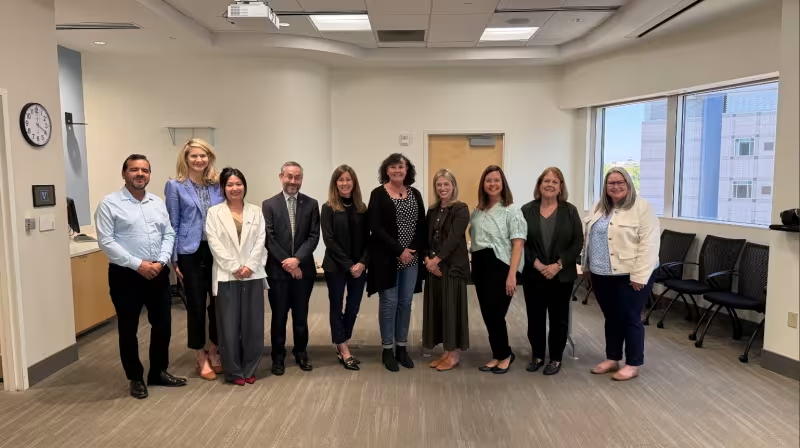
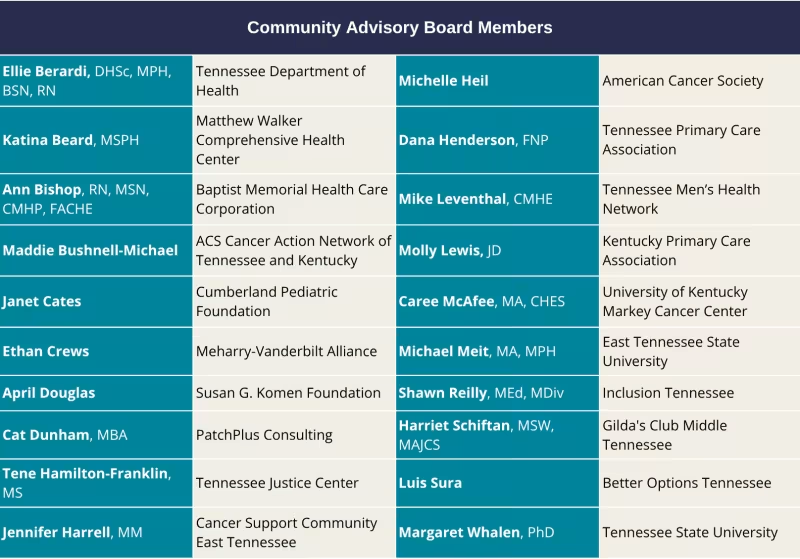
The Vanderbilt-Ingram Cancer Center (VICC) Community Advisory Board (CAB) is a group of invited organizational representatives and individuals from across the cancer center’s catchment area, which includes Tennessee and parts of Kentucky, who serve as a community expert group providing advice and guidance to VICC. The CAB meets four times a year to share insights, identify priorities, and collaborate on initiatives that address cancer-related needs in the region. It provides strategic guidance to the cancer center, leveraging the unique expertise of its members, to ensure VICC’s cancer research and care are relevant and responsive to the community’s needs.
The Vanderbilt-Ingram Cancer Center collaborated with its Community Advisory Board (CAB) to develop a curated repository of cancer-related resources. It reflects the CAB’s commitment to addressing community needs across the full spectrum of cancer care—from screening to survivorship—offering patients and caregivers a comprehensive, organized guide to support every step of the journey.
Access Cancer Resources for Patients and Caregivers
Patient and Family Advisory Council
The Vanderbilt-Ingram Cancer Center is committed to providing personalized, patient-centered care by listening to your needs, incorporating your ideas, partnering in your safety, and educating you to advocate for your own care. We believe excellent healthcare happens when patients, families, and our team work together as partners and honor the expertise each brings.
If you or a loved one has received care at any Vanderbilt-Ingram clinic location within the past three years and are interested in learning more about how to join our Advisory Council, please contact Julie Bulger by email.
Characteristics of successful Patient and Family Advisory Council members:
- Have experience in either the inpatient or outpatient setting at one of the Vanderbilt-Ingram inpatient, outpatient, or satellite locations as a patient, family member, or caregiver
- Have time to attend bimonthly, virtual meetings and provide input on projects in some capacity
- Are committed to quality health care at Vanderbilt Health/Vanderbilt-Ingram
- Are willing to share openly and respectfully and show concern for more than one issue or agenda
- Can listen to differing opinions and share different points of view
Can speak comfortably and with respectful candor in a group setting
e-Advisory Council
VICC patients, family members, and primary caregivers can participate in the VICC e-Advisory group to share feedback and help us make improvements. Volunteer e-advisors complete surveys and give suggestions virtually, which helps in the development and implementation of Cancer Center programs, policies, and practice standards.
All information is kept confidential. Our questions help us ensure that all patients in the VICC clinic are heard and represented.
To join, visit Advise Vanderbilt (opens in a new tab). If you have questions, please contact Julie Bulger by email or call (615) 936-5706.
Meharry-Vanderbilt-Tennessee State Cancer Partnership (MVTCP)
The MVTCP (opens in a new tab) is a 20+ year old partnership between Meharry Medical College, Vanderbilt-Ingram Cancer Center, and Tennessee State University. Collectively, the partnership is focused on improving cancer-related health outcomes through a proportional approach encompassing basic, translational, clinical, and population science. The MVTCP Community Advisory Board (CAB) facilitates input into activities and research projects and promotes community awareness of the partnership. The CAB includes representatives from community-based health promotion organizations, faith-based organizations, cancer survivors, and other community members who bring a direct patient perspective.
Cancer Research Advocates
Research advocates play an important role in helping researchers bring the best science to those affected by cancer. By participating in the development, oversight, and dissemination of cancer research, research advocates help to advance research progress and improve patient outcomes.
Why is research advocacy important?
Advocating for cancer research advancement is critical to finding new and better treatments for cancer patients. In collaboration with bench, translational, and clinical researchers, research advocates can:
- Ensure that research is meaningful and relevant to patients/participants
- Increase public trust and improve cancer research credibility in the community
Who are research advocates?
Individuals are selected and engaged based on their interests, experiences, and skills but are not required to have any prior scientific background. Research advocates may be:
- Cancer survivors
- Caregivers
- Family members
Cancer survivors must be at least one year post-treatment to participate in the Research Advocacy Program. This requirement allows individuals time to focus on their recovery before becoming actively involved in cancer research advocacy. While the general guideline is one year post-treatment, interested individuals may still be considered.
How do research advocates support research efforts?
Research advocates support research efforts in ways that include:
- Serving on projects, committees, advisory boards, and working groups
- Attending research seminars, conferences, and advocate meetings
- Reviewing and providing input on study design, informed consent, and recruitment
- Serving as grant reviewers
- Developing patient-oriented educational tools and resources
- Presenting community educational programs to promote awareness of cancer research and clinical trials
- Developing and conducting advocacy presentations to academic and clinical staff
- Fostering community and academic partnerships and initiatives
- Collaborating with local, regional, and national cancer organizations to facilitate advocacy participation
What are the steps to become a research advocate?
If you are a cancer survivor or caregiver and are dedicated to advancing cancer research, we welcome the opportunity to speak with you about joining the VICC Research Advocacy Program. The most important qualification is a commitment to helping researchers bring the best science to help reduce the burden of cancer.
How Our Research Impacts Our Community
Through bidirectional communication with patients and community stakeholders, the Community Outreach and Engagement (COE) team identifies research, cancer control, and care priorities and collaborates with researchers and partners to turn those priorities into action in the community. A few of our select programs are listed on this page.
Research Scaled to the Population
We engage our community in population health studies focused on genetic and environmental cancer predispositions.
Southern Environmental Health Study
SEHS (opens in a new tab) is a large-scale cohort study aiming to understand how environmental exposures and life experiences influence cancer and other health conditions in communities across the Southern United States. By partnering with researchers and enrolling 35,000 participants, SEHS seeks to uncover patterns that can improve public health and reduce disease burden.
Cancer Awareness in the Community
Lung Cancer Screening Education Project
The project provides data on barriers and facilitators to lung cancer screening (LCS) in rural counties and collaborates with community partners to develop early detection strategies for high-risk populations. It includes educational initiatives, capacity-building at federally qualified health centers, and a foundation for broader implementation of LCS programs in similar communities.
Expanding the Reach of Community Partners
Vanderbilt-Ingram Cancer Center ACCT Awards
Our team provides award opportunities designed to strengthen cancer prevention capacity and provide support services for cancer patients and survivors through the work of community-based organizations. The Community ACCT (Advancing Cancer Control Together) Awards activities typically fall into four areas:
- Reducing cancer risk (for example, through tobacco cessation, radon testing, HPV vaccination, or physical activity)
- Promoting cancer prevention and screening education (such as “lunch and learn” sessions or professional training)
- Improving quality of life for patients and survivors (like support groups, exercise programs, or symptom management)
- Addressing health-related social needs that affect cancer outcomes (such as food insecurity, transportation, or housing)
How It Works
- Apply – Applications are accepted at designated periods during the Spring and Fall
- Review – Applications reviewed for alignment with the cancer control and prevention focus areas and the Vanderbilt-Ingram Cancer Center’s strategic goals
- Award – Selected organizations receive funding
- Impact – Awards support programs that improve cancer outcomes for all
Please join our cancer outreach mailing list (opens in a new tab) to stay informed about the Community ACCT Award and when the application period will open. If you have specific questions, please reach out to us by email.
Community News
DAISY Award
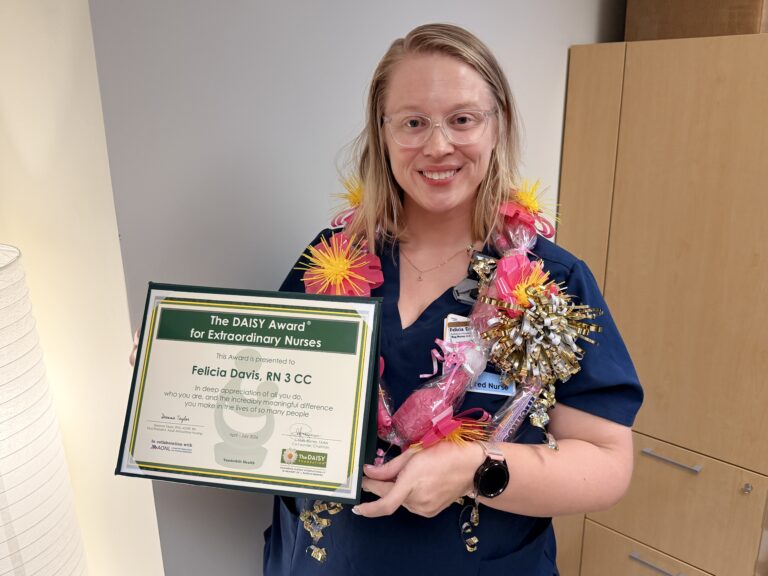
DAISY Award spotlight: ‘Her amazing smile and warm personality immediately reassure us that things will be okay.’
Felicia Davis, RN, works in the Radiation Oncology unit at Vanderbilt-Ingram Cancer Center. She is one of the latest Vanderbilt Health DAISY Award winners.
Cancer
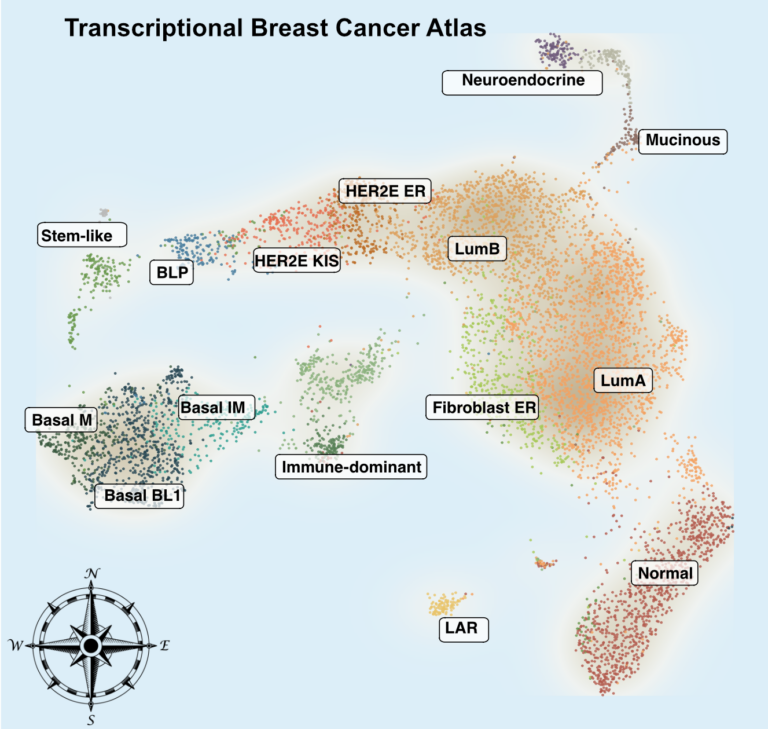
Breast cancer atlas helps chart course for precision oncology
The new map integrates data from more than 7,600 tumors across 22 independent studies and reveals previously hidden forms of breast cancer that differ in prognosis, biology and…
Cancer
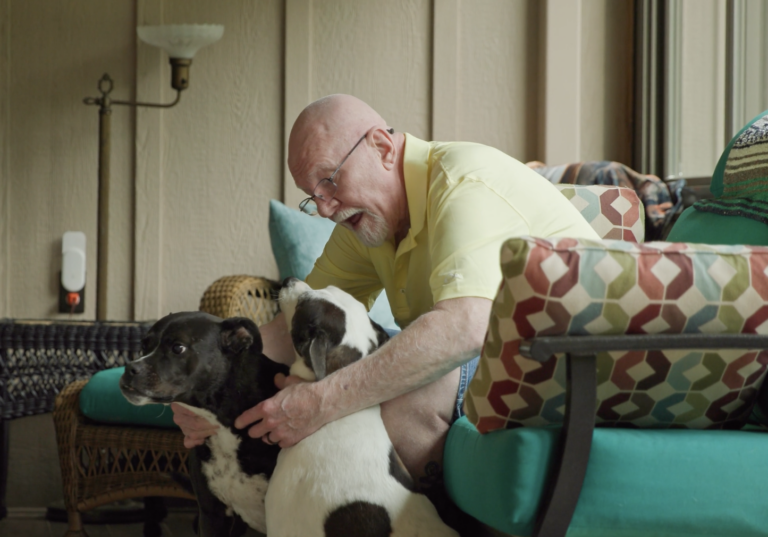
More time with the people he loves: A veteran tells his TIL therapy story, a first at Vanderbilt-Ingram Cancer Center
Senior Chief Petty Officer Ed Stift, U.S. Navy (retired), was the first patient to receive tumor-infiltrating lymphocyte (TIL) therapy at Vanderbilt-Ingram Cancer Center. Watch…