
Advanced Radiation Treatments
Advanced radiation treatments use innovative technology and specialized techniques to deliver precise, personalized cancer care while helping to protect healthy tissue.
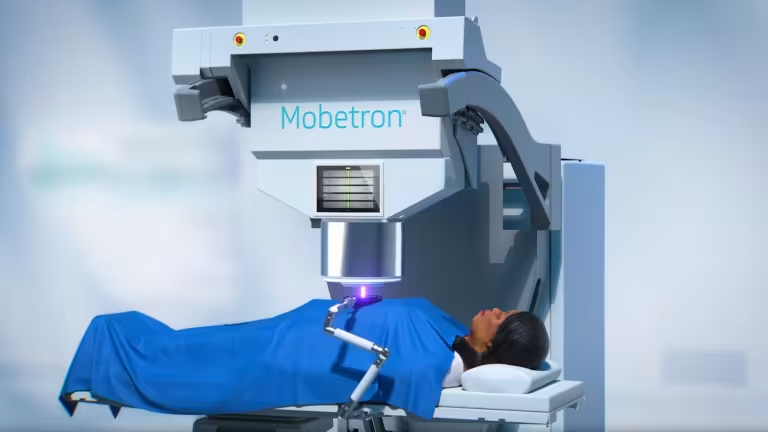
Direct Treatment in the Area Where Cancer Is Present
Intraoperative radiation therapy (IORT) is an advanced treatment used for select pancreatic, rectal and sarcoma tumors. During this treatment, a mobile linear accelerator is used in the operating room to deliver radiation immediately after a tumor is removed. This allows radiation to be targeted directly to the area at greatest risk for recurrence while helping spare nearby healthy tissues and organs.
Frequently Asked Questions
How does IORT work?
During surgery, a mobile radiation delivery device is brought into the operating room. After the tumor is removed, the surgical and radiation oncology teams work together to deliver a concentrated dose of radiation directly to the treatment area. Because healthy tissues and organs can be moved or shielded during the procedure, radiation can be delivered more precisely.
What are the benefits of IORT?
- Delivers radiation directly to the area at highest risk for cancer recurrence
- Helps protect surrounding healthy tissues and organs
- Provides highly targeted, personalized treatment
- May reduce the need for additional radiation treatments
- Allows radiation to be delivered during a planned surgical procedure
Which cancers are treated with IORT?
At Vanderbilt-Ingram Cancer Center, intraoperative radiation therapy (IORT) is used for select patients with:
- Pancreatic cancer
- Rectal cancer
- Sarcomas
Your care team will determine whether IORT is appropriate based on your diagnosis, tumor location and overall treatment plan.
Who could be a candidate for this treatment?
Not every patient is a candidate for IORT. Your care team will review your diagnosis, treatment history and overall health to determine whether this approach may be appropriate for your specific cancer and treatment plan.
Adaptive Radiotherapy
Adaptive radiotherapy allows your care team to adjust your radiation treatment as your body and cancer change over time. This personalized approach helps deliver radiation more precisely while protecting healthy tissues whenever possible.
Brachytherapy
Brachytherapy is radiation treatment that is given directly into your body. It is placed as close to the cancer as possible. The radiation is given using tiny devices, such as wires, seeds, or rods filled with radioactive materials. These devices are called implants.
Brachytherapy lets your healthcare provider use a higher total dose of radiation over a shorter time than is possible with external beam radiation therapy. The radiation dose is focused on the cancer cells. It does less damage to the nearby normal cells.
Brachytherapy implants may be short-term (temporary) or long-lasting (permanent). Your care team will determine whether brachytherapy is an appropriate option based on your diagnosis and treatment goals.
Temporary brachytherapy
Temporary implants are removed after the treatment has ended. The implants may be hollow needles, hollow tubes (catheters), or balloons filled with fluid. The implants are inserted into or near the cancer for short time, then removed. Either high-dose or low-dose brachytherapy may be used:
- High-dose rate (HDR) brachytherapy. The implants stay in the body for several minutes and then are removed.
- Low-dose rate (LDR) brachytherapy. The implants stay in the body for hours or days and then are removed.
Permanent brachytherapy
This type is also called low-dose rate brachytherapy or seed implantation. It uses implants called pellets or seeds. These implants are very small, about the size of a grain of rice. Your healthcare provider inserts the seeds directly into a tumor with thin, hollow needles. The seeds are left in place after the radiation has been used up. Their small size causes little or no pain. With time, the radiation lessens, then stops completely.
Frequently Asked Questions
Why might I need brachytherapy?
Brachytherapy may be used to treat many types of cancer, such as:
- Prostate cancer
- Cancer of the vagina, cervix, or uterus
- Breast cancer
- Eye cancer
- Head and neck cancers
It may be done along with external beam radiation therapy to help destroy tumor cells for certain types of cancer.
What are the risks of brachytherapy?
Side effects of brachytherapy often depend on where the therapy is given and the therapy dose. Risks and possible complications include:
- Extreme tiredness (fatigue)
- Pain from staying in 1 position
- Temporary side effects in the area being treated. For example, head and neck brachytherapy can cause sores in the mouth and throat. Brachytherapy to the pelvis can cause urinary or digestive issues, such as urinary frequency or diarrhea.
- Failure to affect tumor growth
- Damage to healthy tissue and organs
- Having another cancer later due to radiation exposure
- Risks of anesthesia
How do I get ready for brachytherapy?
Before brachytherapy starts, your healthcare provider will decide which tests you need. These may include blood tests, an electrocardiogram (EKG), chest X-rays, and scans, such as ultrasound, MRI, or CT.
A few days before your brachytherapy starts, you will be given specific directions about how to prepare. Follow these directions closely. Tell your healthcare provider about all medicines you take. This includes both over-the-counter and prescription medicines. It also includes vitamins, herbs, and other supplements. You may need to stop taking some or all of them before the procedure. You may need to stop taking aspirin and over-the-counter pain and fever medicines (called NSAIDS or nonsteroidal anti-inflammatory drugs). These can cause bleeding problems. Also, follow any directions you’re given for not eating or drinking before the procedure.
What happens during brachytherapy?
The type of cancer you have, its location, and other factors will determine your treatment schedule. How long brachytherapy lasts will depend on the type of treatment given. You may go home after treatment. Or you may stay in the hospital for 1 or more nights.
Before the procedure. Right before the brachytherapy starts, you may need anesthesia medicine to keep you free from pain while the implants are placed in your body. This will depend on the size and number of implants, as well as the location of the insertion site. Anesthesia makes you numb, drowsy, or completely asleep. An IV (intravenous) line is put into a vein in your arm or hand to give fluids and medicines.
During the procedure. A delivery device, such as a needle, is placed into the cancer site. The device may be passed through a nearby opening in the body, such as the vagina or rectum. Or a cut (incision) may be made in the skin. Implants are then passed through the delivery device into or near the cancer site. The implants are placed by hand or machine. X-rays, ultrasound, or another imaging test may be used to make sure of correct placement. Here's what happens depending on the type you have:
- High-dose rate (HDR) brachytherapy. The implants are put in once a day for several minutes, then removed. The implant tube may be removed after each treatment session. Or it may stay in place. You may go home between treatments. Or you may stay in the hospital until all treatment sessions are done.
- Low-dose rate (LDR) brachytherapy. The implants and delivery device stay in place for hours to days. You stay in the hospital during this time.
- Permanent brachytherapy. The implants are put in place and not removed. Very low doses of radiation are given, and the radiation stops over time.
What happens after brachytherapy?
You will recover from the procedure, then go to your hospital room. Or you will be released to go home. If you are able to go home, have an adult family member or friend drive you.
If you stay in the hospital
Some types of brachytherapy need you to be in the hospital for a few days. You will need to follow specific rules to protect others from the effects of the radiation while it is active inside your body. Generally, treatment may include:
- Staying in a private room
- Hospital staff time spending as little time as possible in your room when care is being given
- Placing portable shields between you and staff or visitors
Limits for visitors may include:
- Not allowing pregnant women or children under a certain age to visit
- Limiting how long visitors may stay
- Limiting how close visitors can get to you
If you are discharged home, you may have additional visitor limitations. Ask your healthcare provider for guidelines.
If you go home
Follow any directions you are given for caring for yourself between treatments. These may include:
- Take any prescribed medicine exactly as directed.
- Care for your bandage and implant site as directed.
- If you have an implant tube left in place, follow your healthcare provider’s directions for taking care of it.
- Follow your healthcare provider’s directions about not putting weight or pressure on the implant site.
- Follow any radiation safety measures you are given.
Stereotactic Radiosurgery (SRS)
This therapy delivers a high dose of radiation during a small number of treatments. We use SRS to target tumors in sensitive areas of the body like the brain and spinal cord. We deliver the radiation with millimeter precision to spare the rest of the brain or spinal cord from high-dose radiation. Sometimes, only a single treatment may be necessary. Occasionally, if the tumor is large, we may need additional treatments to decrease side effects, a process called fractionated stereotactic radiotherapy (FSRT).
Stereotactic body radiotherapy (SBRT)
Also called stereotactic ablative radiotherapy (SABR), it is similar to SRS except that it is used to treat other sites in the body, including the lungs and liver and sometimes areas like the adrenal gland, pancreas, or prostate. Patients typically need three to eight treatments, depending on the tumor size.

Request an Appointment
We can assist you with scheduling a consultation with a specialist for your specific needs.
Care That’s Centered Around You

Patient & Family Resources
Access support programs, educational resources, and services designed to help patients and caregivers navigate cancer care.

Your Care With Us
Learn what to expect before, during, and after treatment, including appointments, support services and survivorship resources.

Living With & After Cancer
Treating cancer can require additional interventions and rehab. Our specialists care for your whole self, not simply one part of the body.
We’re Here to Help
Whether you're newly diagnosed, seeking a second opinion, or exploring treatment options, our team is ready to connect you with the care and resources you need.