
Robotic Assisted Surgery & Robotic Bronchoscopy
Robotic-assisted surgery and bronchoscopy combine advanced technology with specialized surgical expertise to help provide precise, minimally invasive treatment options for patients with cancer.
What Are Robotic-Assisted Surgery and Bronchoscopy?
Robotic-assisted surgery and bronchoscopy are advanced procedures performed by specially trained physicians using robotic technology to enhance precision and control. The robot does not perform the procedure independently. Instead, the surgeon or physician directs every movement using specialized instruments and high-definition imaging.
These technologies can allow physicians to perform complex procedures through smaller incisions or less invasive approaches while maintaining exceptional precision. For some patients, robotic-assisted procedures may help reduce pain, shorten recovery time and minimize disruption to healthy tissue.
Vanderbilt Health has been performing robotic-assisted procedures since 2003. Our physicians receive specialized training and certification to use these advanced technologies and can discuss whether a robotic-assisted approach is appropriate for your care.
Video: Robotic-assisted Surgery for Pancreas and Liver Tumors

Request an Appointment
We can assist you with scheduling a consultation with a specialist for your specific needs.
Robotic Bronchoscopy with Cone-Beam CT
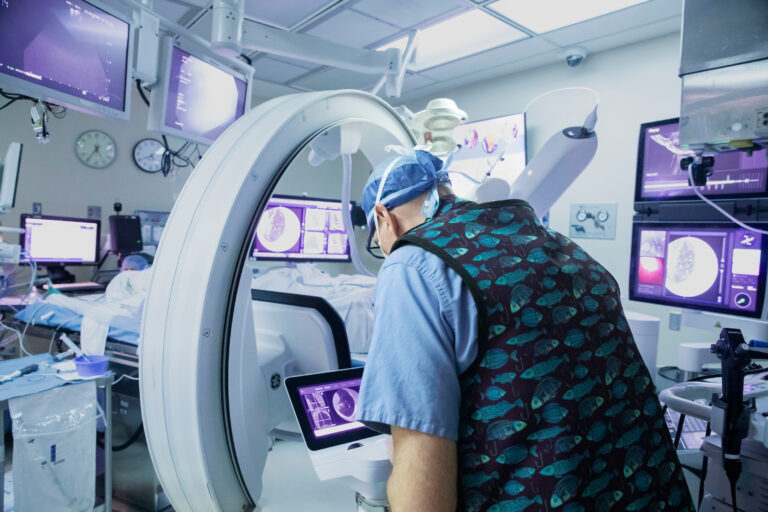
Robotic bronchoscopy combined with cone-beam CT imaging helps specialists reach small or difficult-to-access lung nodules with greater precision. This advanced approach can help obtain a diagnosis without the need for more invasive surgical procedures.
Most lung nodules are not cancerous. However, when cancer is suspected, obtaining an accurate diagnosis quickly is essential to developing the most effective treatment plan.
During the procedure, real-time 3D imaging helps physicians guide biopsy tools directly to the area of concern, improving accuracy while minimizing disruption to surrounding lung tissue.
Frequently Asked Questions
What happens during a robotic bronchoscopy?
During the procedure physicians use a controller to precisely guide a bronchoscopy tube (smaller and more flexible than traditional tubes) to the area of concern. The physician is guided to that area by a CT scan that is going on at the same time and is displayed in real time for the physician to view their progress. A piece of the concerning lung tissue is taken and analyzed to determine if the nodule is cancer or not.
What are the potential patient benefits?
- May help avoid more invasive surgical biopsies
- Improved access to small or hard-to-reach lung nodules
- Faster diagnosis and treatment planning
- Enhanced biopsy accuracy
- Reduced risk of complications (e.g. blood loss)
How do I qualify for Robotic-assisted surgery?
Our surgical oncologists evaluate eligibility on each individual patient basis. Their evaluations take into account the tumor location, stage, extent of tumor, and other factors. They review the scans and personalize the best approach for each patient.
Business Innovation
How robotic bronchoscopy helped a Georgia man avoid unnecessary lung surgery
Oncologist Mohamed Shanshal, MD, said robotic bronchoscopy significantly improves getting patients the appropriate treatment as soon as possible, reducing their anxiety and…
Robotic-Assisted Surgery for Gynecologic Cancers
Minimally invasive robotic-assisted surgeries may be used to treat gynecologic (uterine, cervical, ovarian, endometrial) cancers. Using advanced technology robotics give surgeons 3D views of the surgical site, more precise movements, and better dexterity. These benefits in some cases allow for preservation of tissue and preservation of fertility. All of our gynecologic oncologists are trained and consistently perform robotic-assisted surgical techniques
Additional Information about Gynecologic Cancer Procedures
Which robotic-assisted Gynecologic surgery performed at Vanderbilt?
- Treatments for uterine cancer
- Treatments for cervical cancer
- Hysterectomies
- Myomectomies
What are the potential patient benefits?
- Small incisions
- Fertility preservation
- Reduced Scarring
- Less Blood Loss
- Reduced Pain
- Shorter hospital stays
- Faster recovery
Who could be a candidate for this treatment?
Who could be a candidate for this treatment?
Robotic-Assisted Surgery for Hepatobiliary Cancers
Minimally invasive robotic-assisted surgeries are used to treat hepatobiliary (liver, gallbladder, pancreas and bile ducts) cancers. Liver and pancreas surgeries can be very complex, using advanced technology robotics give surgeons better views of the surgical site, more precise movements, and better dexterity. Multiple of our surgical oncologists are trained and consistently perform robotic-assisted surgical techniques
Additional Information about this Treatment in Hepatobiliary Surgeries
How do I qualify for Robotic-assisted surgery?
Our surgical oncologists evaluate eligibility on each individual patient basis. Their evaluations take into account the tumor location, stage, extent of tumor, and other factors. They review the scans and personalize the best approach for each patient.
Types of Robotic-assisted Hepatobiliary Surgeries performed at Vanderbilt
- Hepatectomy
- Bile duct resection
- Cholecystectomy
- Pancreatectomy (distal and total)
- Pancreaticoduodenectomy (Whipple)
What are the potential patient benefits?
- Small incisions
- Reduced Scarring
- Less Blood Loss
- Reduced Pain
- Shorter hospital stays
- Faster recovery

Cancer
Resilient Stage 4 colon cancer patient discovers surgery option close to home
Vanderbilt-Ingram Cancer Center is “pushing the envelope” with new technologies like histotripsy and new programs like robotic liver surgery and robotic pancreas surgery, serving…
Robotic-Assisted Surgery for Urologic Cancers
Minimally invasive robotic-assisted surgeries are used to treat Urologic (prostate, kidney, bladder) cancers. Using advanced technology robotics give surgeons 3D views of the surgical site, more precise movements, and better dexterity. Many of our urologists are trained and consistently perform robotic-assisted surgical techniques
Additional Information About the Procedure in Urologic Cancers
What types of urologic cancers can be treated with robotic-assisted surgery?
Robotic-assisted surgery may be used to treat certain prostate, kidney and bladder cancers. Your care team will determine whether a robotic approach is appropriate based on your diagnosis and treatment plan.
What robotic-assisted procedures are performed at Vanderbilt-Ingram?
Our specialists perform a variety of robotic-assisted procedures, including nerve-sparing radical prostatectomy, partial and radical nephrectomy, kidney reconstruction procedures and radical cystectomy, as well as other surgeries for prostate, kidney and bladder cancers.
What are the potential benefits of robotic-assisted surgery?
For some patients, robotic-assisted surgery may offer smaller incisions, less blood loss, reduced pain, less scarring, shorter hospital stays and faster recovery. In certain cases, nerve-sparing techniques may also be possible.
Who may be a candidate for robotic-assisted surgery?
Eligibility depends on several factors, including the type, location and stage of cancer, as well as your overall health and treatment goals. Your urologic cancer team will review your imaging, medical history and individual needs to determine whether a robotic-assisted approach is right for you.
Care That’s Centered Around You

Patient & Family Resources
Access support programs, educational resources, and services designed to help patients and caregivers navigate cancer care.

Your Care With Us
Learn what to expect before, during, and after treatment, including appointments, support services and survivorship resources.

Living With & After Cancer
Treating cancer can require additional interventions and rehab. Our specialists care for your whole self, not simply one part of the body.
We’re Here to Help
Whether you're newly diagnosed, seeking a second opinion, or exploring treatment options, our team is ready to connect you with the care and resources you need.