
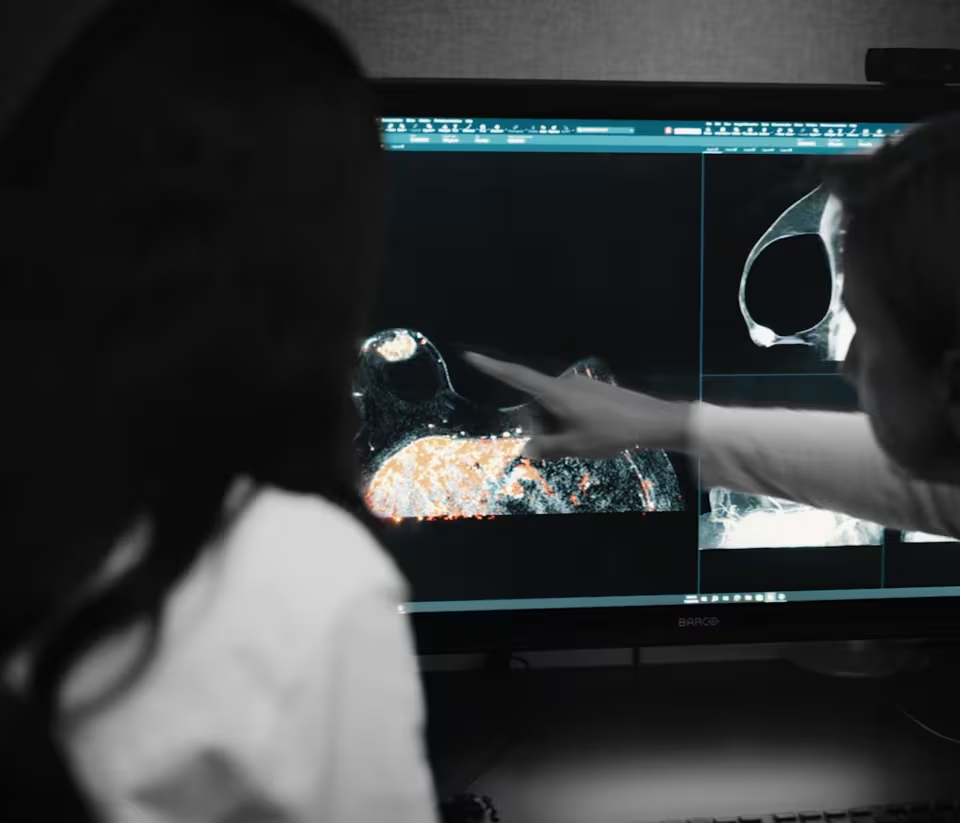
Breast Cancer Research Program
This collaborative and multidisciplinary team integrates discovery research, translational, and clinical research to improve outcomes for patients with breast cancer. The program unifies mechanistic discovery and clinical implementation.
Pursuing an End to Breast Cancer
The Breast Cancer Research Program has the overarching goal of addressing unmet clinical needs by translating basic science discoveries into practice-changing clinical research. The program also fosters new translational directions by catalyzing laboratory and population-based research that could positively impact reduction of mortality, as well as improvement of optimal care in breast cancer. This “bedside to bench and back” approach is achieved through a strong cadre of researchers including laboratory, clinical and population-based investigators, as well as extensive scientific collaborations with multiple national and international institutions, as well as consortia and pharma. Ongoing basic and translational discoveries from the Breast Cancer Research Program and other programs provide a steady pipeline for novel interventional trials with innovative approaches. Through these research endeavors, the Breast Cancer Research Program also provides training opportunities for mentoring the next generation of breast cancer researchers.
Key Areas of Interest
The Breast Cancer Research Program has expertise in and leads clinical trials related to:
ER Positive Breast Cancer
- Inhibition of phosphatidylinositol-3 kinase (PI3K) as a strategy to abrogate antiestrogen resistance in HR+ breast cancer
- FGFR pathway as a strategy to abrogate CDK4/6 inhibition and antiestrogen resistance in HR+ breast cancer
- RSK2 as a regulator and therapeutic target for HR+ breast cancer
- CDK4/6 inhibitors, anti-tumor immunity and the pro-inflammatory secretome
Triple Negative Breast Cancer
- Refinement of triple-negative breast cancer (TNBC) molecular subtypes: Implications for neoadjuvant chemotherapy selection
- JAK2 amplification as a prognostic and predictive biomarker in TNBC
- Strategies to improve outcomes for TNBC patients integrating subtype-specific genomic and immune-based discoveries
Immunotherapy in Breast Cancer
- Targeting antigen presentation to improve immunotherapy responses in breast cancer
- Mutant spliceosomes as a predictor for immune checkpoint blockade therapies
Non-Invasive Imaging in Breast Cancer
- Image integration to breast cancer biology and clinical trials
- Evaluating non-invasive imaging technologies to predict anti-cancer drug action and treatment response
Targeted Therapies
- Ongoing basic and translational discoveries provide a steady pipeline for novel interventional trials with innovative approaches
- Systematic liquid biopsy using cell-free DNA (cfDNA) and tissue repository protocol for all stages and types of breast cancer
- Extensive scientific collaborations with multiple national and international institutions, as well as consortia and pharma
Inflammatory Breast Cancer
- Unique genomic alterations that lead to inflammatory phenotypes
- New models of inflammatory breast cancer
Meet the Program Members
The Breast Cancer Research Program includes members from multiple basic science, population research, and clinical departments across Vanderbilt University and Vanderbilt Health. Justin M. Balko, PharmD, PhD, and Vandana G. Abramson, MD, are co-leaders of the program.

Vandana Abramson
Co-Leader, Breast Cancer Research Program, VICC

Justin Balko
Co-Leader, Breast Cancer Research Program, VICC
Featured News
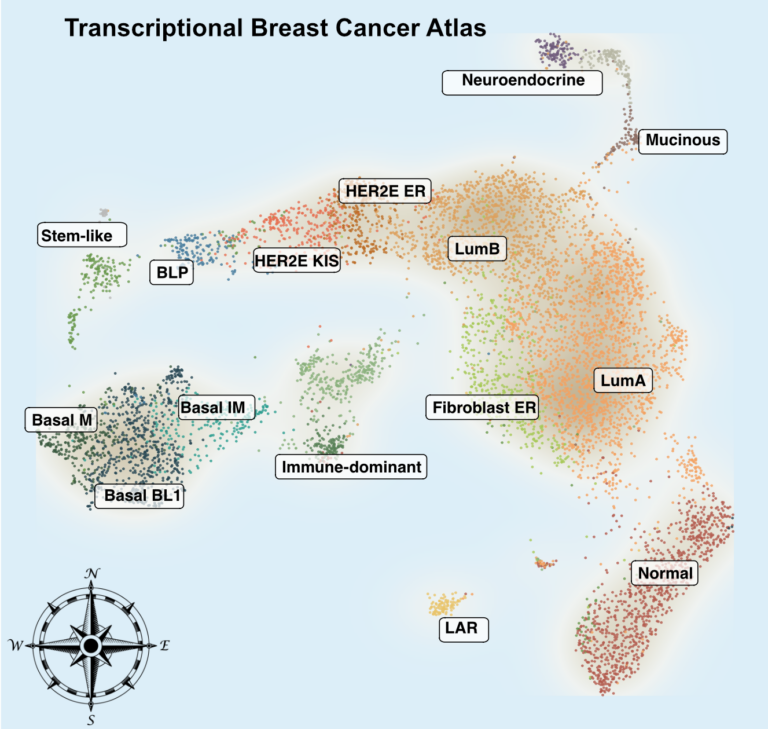
Cancer
Breast cancer atlas helps chart course for precision oncology
The new map integrates data from more than 7,600 tumors across 22 independent studies and reveals previously hidden forms of breast cancer that differ in prognosis, biology and…
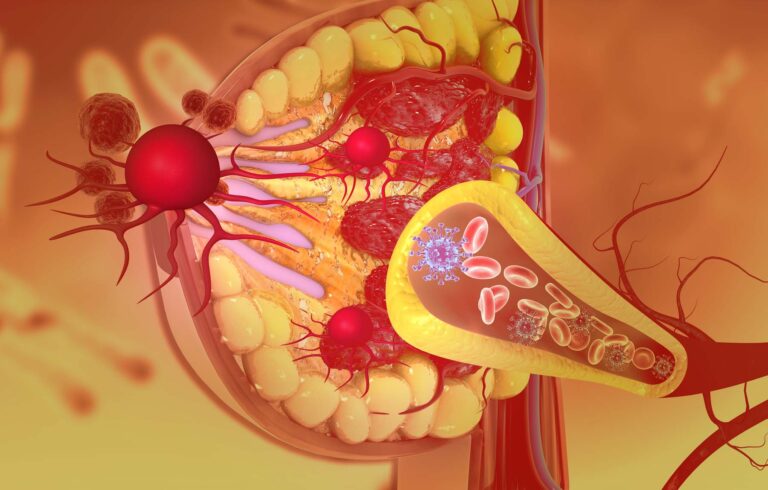
Cancer
Vanderbilt Health researchers receive ‘Mars Shot’ award to improve invasive breast cancer diagnosis
Approximately 48,000 women are diagnosed with invasive lobular carcinoma in the United States each year, yet the disease remains “underappreciated and under-researched.

Cancer
Cassandra Chaytor uses her breast cancer experience to support patients, families and her community
She hopes others will join her in participating in or contributing to Team Vanderbilt’s efforts at this year’s Susan G. Komen More Than Pink Walk, on Oct. 3.
A Selection of Recent Publications from our Breast Cancer Members
Cancer Immunology Research
In Situ Detection of Individual Classic MHC-I Gene Products in Cancer
Clinical Cancer Research
Clonal Hematopoiesis of Indeterminate Potential Influences Breast Cancer Outcomes in a Genotype-Specific Manner
Journal of Bone Oncology
Abaloparatide and paclitaxel combination therapy Improves bone volume and tumor burden in Bone-Metastatic breast cancer
Cancer Discovery
NKG2A Is a Therapeutic Vulnerability in Immunotherapy Resistant MHC-I Heterogeneous Triple-Negative Breast Cancer
Breast Cancer Research
PTHrP intracrine actions divergently influence breast cancer growth through p27 and LIFR
Clinical Cancer Research
Associations of Immune Checkpoint Predictive Biomarkers (MHC-I and MHC-II) with Clinical and Molecular Features in a Diverse Breast Cancer Cohort
npj Precision Oncology
Reduced penetrance BRCA1 and BRCA2 pathogenic variants in clinical germline genetic testing
JBMR Plus
Abaloparatide increases bone mass without affecting growth of bone-disseminated cancer cells
Breast Cancer Research Treatment
Adverse events in patients treated with neoadjuvant chemo/immunotherapy for triple negative breast cancer: results from seven academic medical centers
Journal of Bone Mineral Research
Programmed cell death protein 1 (PD-1) blockade regulates skeletal remodeling in a sex- and age-dependent manner
Become a Research Member Today
Lorem ipsum dolor sit amet consectetur. Faucibus aliquam egestas aliquam ut bibendum id. Pellentesque odio elit aliquet non malesuada eget nec nulla eros. Pulvinar morbi ut quis eu. Lorem non purus sit fermentum quis eget proin enim.