

Cancer Health Outcomes and Control Research Program
Conducting research across the cancer control continuum, this research program focuses on goals to reduce incidence of cancer diagnosis and improve the outcomes from cancer diagnosis for all. Fostering multidisciplinary collaborations and teams that focus on improving outcomes for those at risk for, living with and after cancer.
Improving Cancer Outcomes
The Cancer Health Outcomes and Control Program conducts research aimed at reducing the burden of cancer across the entire cancer care continuum. The research efforts of this interdisciplinary, collaborative program are focused across all types of cancer.
Research Themes
The Cancer Health Outcomes and Control Program aims to achieve the goal of reducing the cancer burden through:
Prevention & Early Detection
Establishing and further developing population and community-based resources for research into prevention and early detection
Treatment-Related Outcomes
Identifying environmental, sociobehavioral, and genetic factors that affect short- and long-term outcomes
Survivorship & Palliative Care
Understanding the scope of and developing interventions to prevent or ameliorate adverse long-term patient-centered outcomes following cancer diagnosis and treatment
Health Care Innovation
Designing and evaluating healthcare practices that enhance access to and delivery of care for individuals affected by cancer.
Meet the Program Members
Stacie B. Dusetzina, PhD, Eric L. Grogan, MD, MPH, and Hilary Tindle, MD, MPH, co-lead the Cancer Health Outcomes and Control program, which is made up of 40 members. The program maintains close alliances with other cancer center programs, including population science partner program, Cancer Epidemiology, and the basic and clinical science programs. Extensive collaborations with community partners—including Meharry Medical College, Tennessee State University, federally qualified community health centers and oncologists at affiliate institutions, and other academic centers—extend the program's impact in the community and foster multi-institution research.

Stacie Dusetzina
Co-Leader, Cancer Health Outcomes and Control Research Program, VICC

Eric Grogan
Co-Leader, Cancer Health Outcomes and Control Research Program, VICC
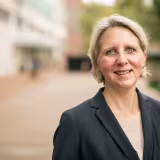
Hilary Tindle
Co-Leader, Cancer Health Outcomes and Control Research Program, VICC
Featured News

Health Policy
Medicare drug price negotiations could save patients up to $700 per year, study finds
The study found that Americans enrolled in standalone Medicare Part D plans are projected to save an average of $685 per year, and people with Medicare Advantage plans could save…

Mission of Caring
Vanderbilt Institute for Population and Public Health celebrates two decades of transformative success
The institute reaches across the state, nation and the global community to build and translate knowledge into better health.

Mild cognitive impairment’s impact on postsurgical pain is focus of $3.2 million grant
At least 11% of older surgical patients — roughly 3 million people annually — have MCI, a condition linked to progression to Alzheimer’s disease.
A Selection of Recent Publications from our Cancer Health Outcomes and Control Members
JCO Oncology Practice
Prevalence and Associated Factors for Depression Among Patients With Sarcoma
Journal of General Internal Medicine
A Qualitative Evaluation of Factors Influencing the Lung Cancer Screening Program Navigator Role
Current Developments in Nutrition
Federal Nutrition Assistance Programs and UltraProcessed Food Intake among Preschool-Aged Children
Journal of Biomedical Informatics
Unsupervised discovery of clinical disease signatures using probabilistic independence
American Journal of Human Genetics
Large-scale integration of omics and electronic health records to identify potential risk protein biomarkers and therapeutic drugs for cancer prevention
American Journal of Preventive Medicine
The Association of Organizational Readiness With Lung Cancer Screening Utilization
American Journal of Clinical Nutrition
Reliability and validity of assigning ultraprocessed food categories to 24-h dietary recall data
Pediatric Obesity
Ultra-processed food consumption and BMI-Z among children at risk for obesity from low-income households
JCO Clinical Cancer Informatics
Prediction of Effectiveness and Toxicities of Immune Checkpoint Inhibitors Using Real-World Patient Data
Scientific Reports
Optimizing word embeddings for small dataset: a case study on patient portal messages from breast cancer patients
Radiology: Artificial Intelligence
Performance of Lung Cancer Prediction Models for Screening-detected, Incidental, and Biopsied Pulmonary Nodules
Become a Research Member
Innovation and discovery are driven by collaboration. Becoming a member of Vanderbilt-Ingram Cancer Center extends your participation and opportunities to engage with peers to investigate the questions around how to best prevent, diagnose, treat, and manage cancer.